
DETECTOR BUYING · UPGRADES
When should you upgrade your metal detector?
Know when a metal detector upgrade is justified, when technique or maintenance is the real issue, and which capability should drive the next purchase.
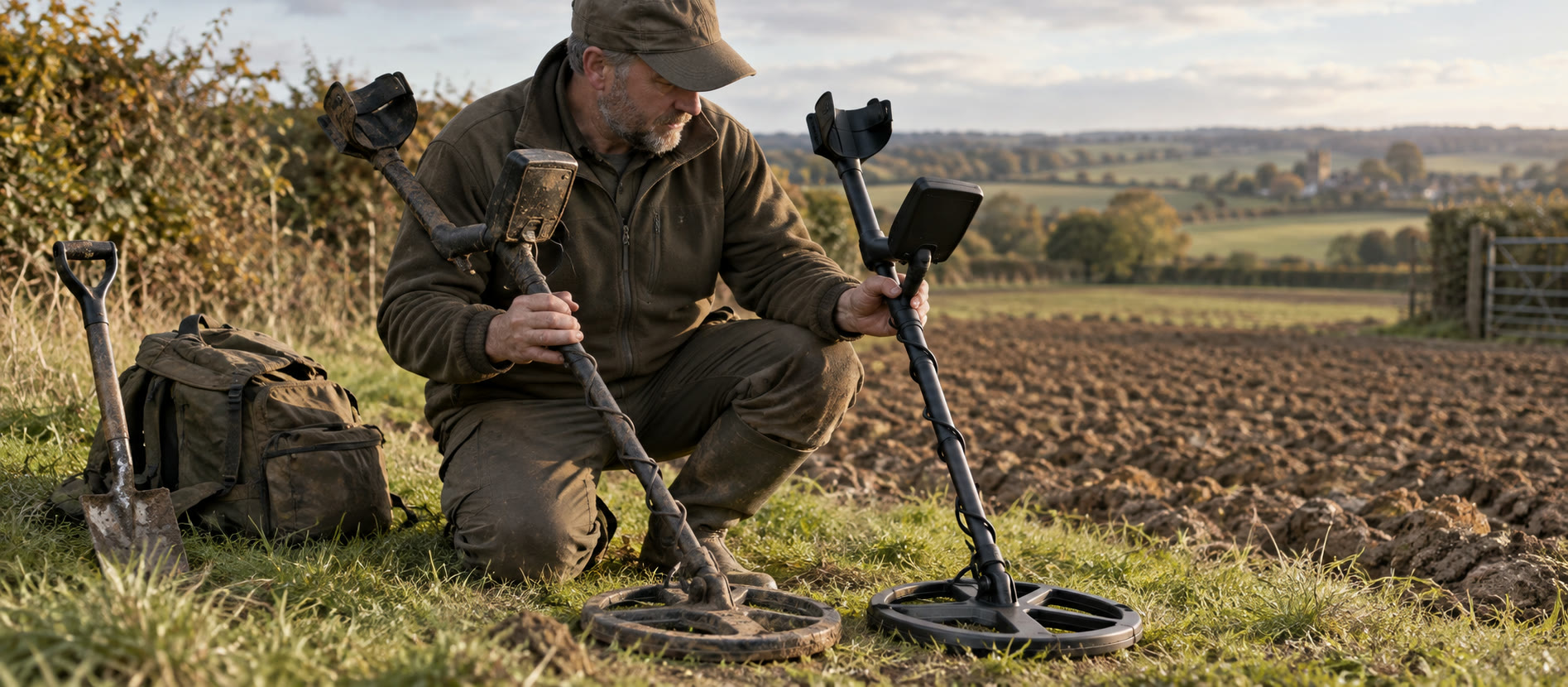
Record three repeatable problems on lawful ground, not one frustrating signal.
Test battery, coil cable, noise cancellation and sensitivity before shopping.
Choose the feature that solves the problem; keep useful accessories.
Identify the bottleneck first
If you are missing targets in iron, the first question is whether the coil is too high, the sweep too fast, or sensitivity unstable. Recheck a buried target from two directions and reduce sweep length before blaming the electronics. A smaller compatible coil or better recovery discipline may solve more than a replacement detector. Our iron-search method gives a reproducible field test.
An upgrade becomes persuasive when the limitation follows you across multiple sessions. Examples include a coil-only waterproof machine that cannot safely cover your regular wet routes; a single-frequency detector that remains difficult on wet salt sand after correct setup; controls or balance that make a normal session tiring; or insufficient audio and ground settings on your actual permissions. Note the site, conditions, settings and what happened. Compare a loan or demonstration machine on equivalent ground, not a promotional air test.
Solve faults before replacing the machine
Intermittent power, false signals and low run time may be service issues. Clean and inspect only as the manufacturer permits. Check the correct battery or charger, the coil connection, trapped grit and software version. Do not open a waterproof control housing to chase a fault. Start with our no-power checklist and coil-cable guide; contact an authorised service centre when the fault persists.
Choose the capability, not an upgrade tier
For someone moving from a very basic dry-land detector into mixed inland and beach ground, the VANQUISH 360 offers automatic Multi-IQ and a fully waterproof 5 m rating with comparatively simple controls. That does not make it the best choice for someone who wants finely adjustable iron handling or recovery speed. It is a new-generation model; older 340 waterproof and battery advice does not transfer. The 340 versus 360 comparison spells out that boundary.
If you already know the ground and need more adjustment, the X-TERRA ELITE can be a more relevant step. Its Multi-IQ and wider control set are useful only if you will learn them. Do not assume its headphones or accessories work underwater just because the detector body has a water rating. Read the exact manual, and check fit and button operation with your own gloves.
The purchase test
Write a sentence: “My current detector cannot do this, in these conditions, despite these checks.” Then compare only machines that answer it. Include coil, headphones, charger, warranty and likely service cost. If you cannot complete the sentence, spend a few sessions logging signals and improving setup before spending. Our are expensive detectors worth it? guide considers the wider value question; used versus new deals with condition and warranty risk.
Common questions
Frequently asked questions
How do I know if my detector needs upgrading?
Document a repeatable ground, water, control or comfort limitation after checking setup, technique and condition.
Will a more expensive detector find deeper targets?
Not automatically. Target, soil, coil and sweep influence depth; test a candidate on comparable ground.
Could a new coil be enough?
Possibly, if an exact compatible coil solves coverage or separation without making the machine unbalanced. Check manufacturer fit.
Should I replace a detector that will not switch on?
First check the correct battery or charging path and ask about warranty or authorised repair. A dead unit is not automatically uneconomic.