
FIELD KIT · PRACTICAL GUIDE
Complete metal detecting kit checklist
Pack a complete UK metal detecting kit without unnecessary gear. Use a site-led checklist for permission, detector, recovery, finds care and the trip home.
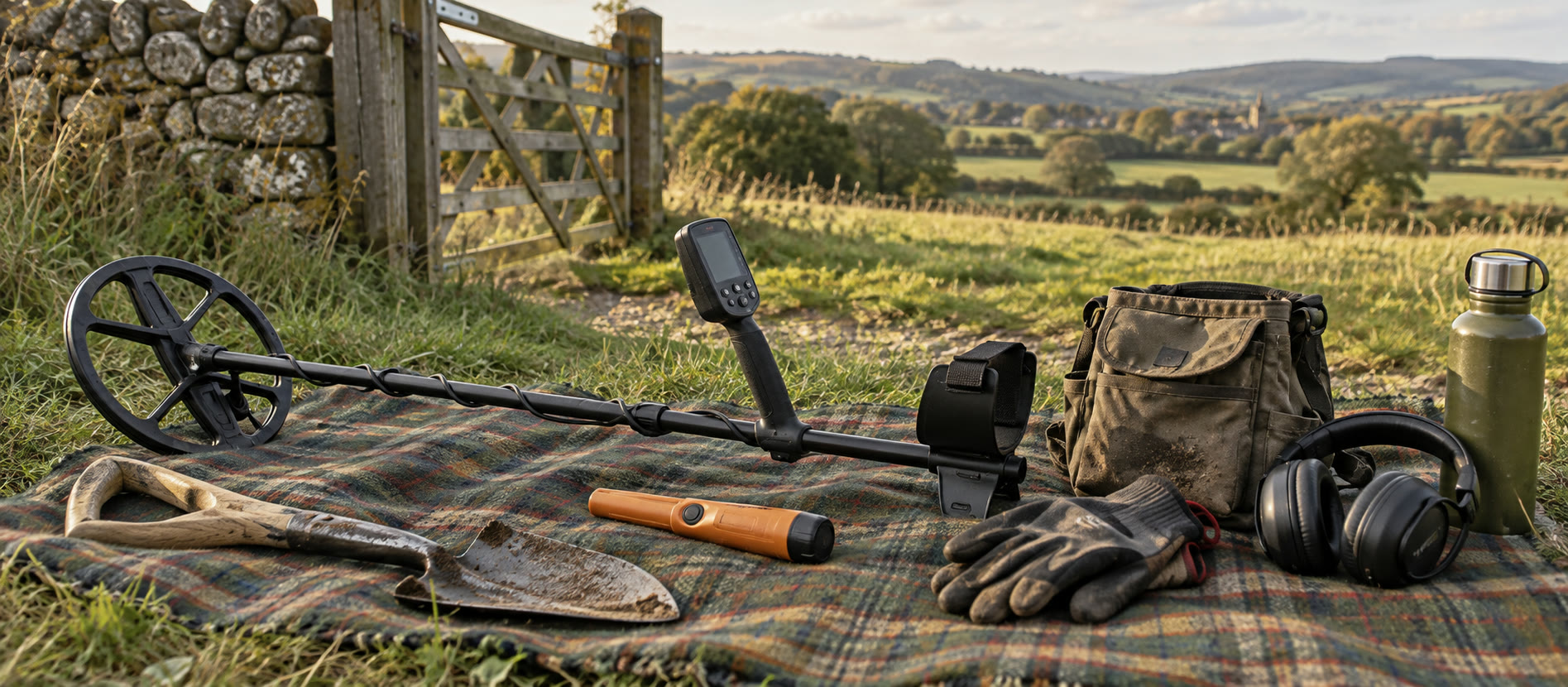
Get the precise land or beach permission and recovery conditions before packing.
Carry only a digging tool appropriate to the ground and agreed method.
Separate ordinary finds, sharp scrap and any item needing specialist care.
Before equipment: confirm the outing
Record the exact permission, permitted area, access route, parking, gates, livestock arrangements, recovery depth and finds agreement. A membership card or detector purchase is not landowner consent. Check protected-area status and the UK permission guides for the specific place. At a beach, add tide, weather, channels and a safe exit; beach detecting is not a generic permission.
Core search kit
- Detector with the correct coil fitted, shaft and cable secure, battery charged and saved settings understood.
- Headphones that actually connect to the model, or a confirmed speaker plan where site conditions allow.
- Pinpointer if it genuinely speeds careful recovery; check its own battery and water rating.
- Phone with charge, map or field reference, emergency contact and a plan for poor signal.
- Water, weather layers and footwear suited to the walk in and out.
A simple detector such as the current fully waterproof VANQUISH 360 can cover mixed ground, but no machine is obligatory for this checklist. Choose according to fit and actual site. See the beginner detector guide before treating a bundle as a complete solution.
Recovery kit only where digging is allowed
Choose a spade or trowel for the soil and agreed method. A long-handled sand scoop makes sense in loose permitted beach sand, not hard clay. Gloves protect from routine abrasion but do not make hazardous objects safe. A small ground cloth keeps spoil together where appropriate and helps leave a clean surface. If turf is frozen, drought-stressed or too wet to close properly, do not dig just because you brought a tool. The pinpoint-and-recover guide explains controlled excavation.
A pinpointer can narrow a recovery so you do not keep widening a hole. The Garrett Pro-Pointer AT is one verified example; check that its holster and alert mode work for you and do not mistake its water rating for permission to enter water.
Finds, litter and record keeping
Carry a finds pouch with separate secure sections for ordinary robust finds and sharp scrap, plus small numbered containers or bags for items that must not rub together. Take a photo and private location before moving anything potentially significant. A pen or offline note format helps when reception fails. A field pouch is not conservation storage and should never mix a fragile object with nails or wet grit. Use the field log and record-a-find guide after each recovery.
Adjust for the place, not the catalogue
For a short dry pasture search, a heavy sand scoop is dead weight. For wet sand, a hand trowel is usually a poor sifting tool. For an organised dig, read the organiser's instructions and group-dig etiquette before packing. If mobility or fatigue is a factor, reduce the route, choose manageable carry and plan a rest; see limited-mobility detector choices. No shopping list should pressure someone into an unsafe recovery.
Before leaving and after returning
At the gate, count tools and check the weather, daylight and exit. During the trip, keep gates and paths as agreed, fill every lawful hole and isolate litter. At home, clean the detector as its maker instructs, dry boots and bag, recharge batteries safely and transfer numbered finds to appropriate storage. If an object may be Treasure or archaeologically important, follow reporting guidance promptly rather than cleaning it for a photograph. The kit is complete when it supports responsible decisions—not when every accessory slot is filled.
Common questions
Frequently asked questions
What is essential for a first metal detecting trip?
Exact permission, a working detector, safe route, suitable footwear, water, phone and a lawful recovery and finds plan.
Do I need a pinpointer immediately?
No. It can speed careful recovery, but practise coil pinpointing first and buy one only if it solves a real problem.
Should I pack a spade for every outing?
No. Bring a digging tool only where recovery is permitted and the ground can be restored.
How should I carry finds and sharp scrap?
Keep them in separate secure sections. Record important objects before moving them and do not mix fragile finds with litter.
Helpful products
Kit that fits this decision
The linked examples are relevant to the guidance above; check exact compatibility and current retailer details before buying.

Mid-range
Minelab VANQUISH 360
Best for: Parks, fields and beaches for a beginner who wants simple controls and one detector for varied ground.
- Multi-IQ simultaneous multi-frequency
- Whole detector to 5 m (IP68)
- 1.16 kg
Automatic simultaneous multi-frequency operation, a low 1.16 kg weight and full 5 m waterproofing make this the least complicated route into mixed UK ground.
Know before buying: The deliberately simple control set offers less room to tune audio and recovery behaviour than the X-TERRA PRO.

Premium pinpointer
Garrett PRO-Pointer AT
Best for: Regular inland, beach and shallow-water detecting where simple controls and a robust waterproof body matter.
- 11.5 kHz
- Whole pinpointer to 6 m (IP68)
- 200 g with battery
A highly visible waterproof probe with three sensitivity levels, proportional audio and vibration, fast retune and a 360-degree detection area.
Know before buying: One button handles power, retune, sensitivity and silent mode, so the control sequence takes a little practice. It uses a replaceable 9V battery.

Compact branded pouch
Minelab Finds Pouch
Best for: Detectorists who prefer a small, uncomplicated pouch and already carry a separate finds box for delicate objects.
- Hip-mounted finds storage
- Lightweight shell construction
- Compact field format
A compact waist pouch intended to keep ordinary finds and small tools at the hip, with a lightweight format that is easy to add to a basic field kit.
Know before buying: The shell pouch is not a substitute for individual bags, labels or a rigid box when precise findspots and fragile surfaces need protecting.