
STARTING OUT · FIELD CONDUCT
Metal detecting group dig etiquette
Respectful metal detecting group-dig habits for UK fields: briefing, search spacing, safe recovery, private findspots, landowner relations and check-out.
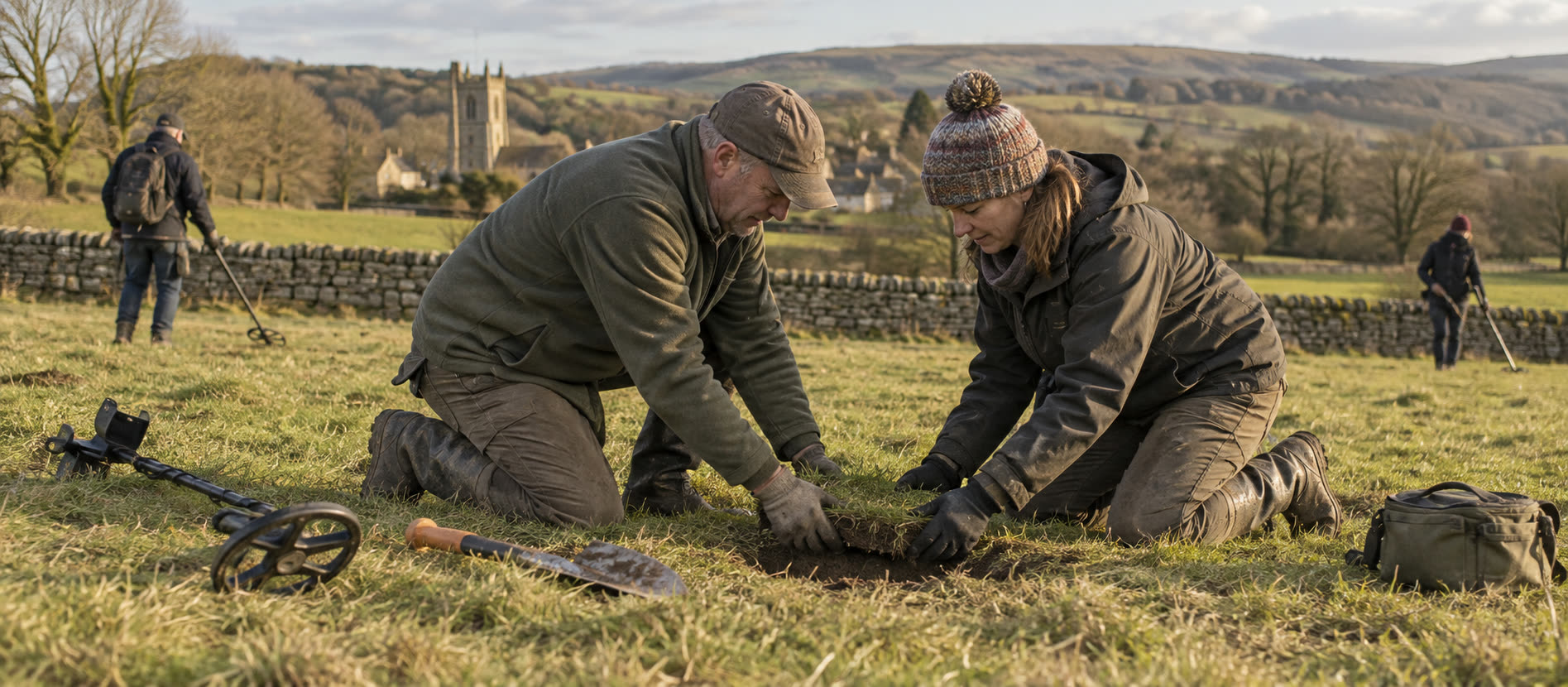
Stay in mapped fields and give other searchers room.
Ask before assisting, filming or touching another person's find.
Record context and follow the organiser's check-out process.
The briefing applies to everyone
An invitation to a group dig is not permission to improvise beyond the mapped boundary. Listen for the field limits, gate and livestock rules, protected areas, digging method, depth limits, finds procedure and finish time. Ask about an unclear boundary before searching. Follow the organised-digs assessment before booking and the first-dig day plan for packing and arrival.
Be courteous to the host and occupier, not only the event staff. Close gates as instructed, keep vehicles and gear on designated routes, and do not walk through a standing crop. A public footpath or adjoining field is not automatically within the permission. The written permission agreement is the foundation; personal confidence is not a substitute.
Space signals and people
Give other detectorists a comfortable working distance so coils do not interfere and a person can dig without someone stepping into the hole. If you want to help investigate a signal, ask first. Do not sweep across someone else's marked line or crowd a promising patch. Keep digging tools sheathed or placed safely away from feet and cables.
A good group shares useful knowledge without claiming a stranger's find or pressing them to disclose a sensitive location publicly. Ask permission before filming faces, equipment or a find; a photograph can inadvertently reveal the field. If someone asks for help with a target-ID reading, explain that it is a clue, not a promise about the object below.
Own your holes and rubbish
Cut and replace plugs according to ground type and the organiser's rules. Keep soil on a cloth if that helps preserve turf, check the hole and spoil for remaining metal, then press the plug down so it sits level. Do not leave exposed sharp scrap by a gate, livestock route or parked car. If conditions are too dry or the crop root system makes clean restoration impossible, stop and ask whether recovery should continue.
The open debris section and zipped keeper pocket make separation easy during a busy day. Use a rigid labelled container within the protected area for a fragile or potentially archaeological object; a common pouch full of loose finds quickly destroys provenance.
Do not turn a significant signal into a spectacle
Photograph and record a safe ordinary find before passing it around. Keep its private location tied to a field number. If two objects are associated or a feature appears, stop enlarging the hole and alert the organiser and appropriate archaeological contact. Grouped-finds context explains the loss caused by digging around an exciting concentration. Suspected ordnance is a different matter: do not handle or move it; withdraw and use the dangerous-finds procedure.
The organiser's show-and-tell table is not a replacement for individual records. Share a find with its ID, exact private coordinate and relevant observations through the event's recording process. Avoid public exact map pins and landowner-identifying photographs. Working with an FLO describes the proper follow-up for potentially archaeological finds.
Finish with a clean handover
Follow the check-out deadline, confirm that no holes remain open, take your rubbish, and record any find you leave with the organiser. Thank the landowner through the agreed channel rather than turning up independently later. A good group day leaves the place usable, the host willing to invite responsible searchers again and the finds connected to where they came from. That outcome matters more than a photograph of a full finds pouch.
Common questions
Frequently asked questions
How close should I search to another detectorist?
Leave comfortable working room and enough separation to avoid coil interference, swinging tools and crowding a recovery hole; ask before joining their line.
May I help dig someone else's promising signal?
Ask first and follow the organiser's rules. Do not enlarge an archaeological context or take over another person's find.
Should I show a find to the group before recording it?
Record the precise private findspot, context and field number first, then share it through the event's finds procedure.
What if a plug will not restore cleanly?
Stop making more holes in that condition and ask the organiser how to proceed. The land and occupier's requirements take priority.
Helpful products
Carry your own rubbish out
A pouch with separate debris and protected pockets supports tidy recovery, but the key habit is checking each hole and taking every sharp scrap home.

All-round field pouch
XP Finds Pouch
Best for: Regular field and wet-weather searches where quick debris storage and a separate protected pocket matter.
- Open pocket plus zipped pocket
- Washable with water drainage
- Belt, strap or MOLLE mounting
A washable belt pouch with an open debris compartment, a zipped pocket for better finds, drainage and MOLLE attachment points for a pinpointer holster or lanyard.
Know before buying: The open section is for robust scrap, not fragile objects; use a rigid finds box inside the zipped area for coins and delicate artefacts.