
PERMISSIONS · WRITTEN TERMS
Metal detecting permission agreement: what to put in writing
A practical written permission checklist covering boundaries, digging, finds, statutory reporting, insurance and ending access.
Confirm the signatory can permit detecting and object recovery.
Attach a boundary map and list excluded features and times.
Separate ordinary-find ownership from statutory Treasure or Treasure Trove processes.
This is a practical checklist, not a substitute for legal advice or a statutory licence. An agreement cannot authorise prohibited activity.
Why get metal detecting permission in writing?
A verbal invitation can leave both sides unsure about the field boundary, a tenant's authority, crop timing, digging depth or who may keep ordinary objects. A short signed note or clear email thread is better than relying on memory. The responsible detecting code referenced by Historic England emphasises landowner permission and proper recording. For the approach conversation, start with our how-to-ask guide; this page covers the terms after a landowner is willing to consider access.
The core terms to agree
People and authority. Name the finder, landowner and relevant occupier or tenant. Ask whether the person signing can permit scanning, digging and removal of objects, and whether any estate, council or stewardship consent is also needed. Include a contact number for problems.
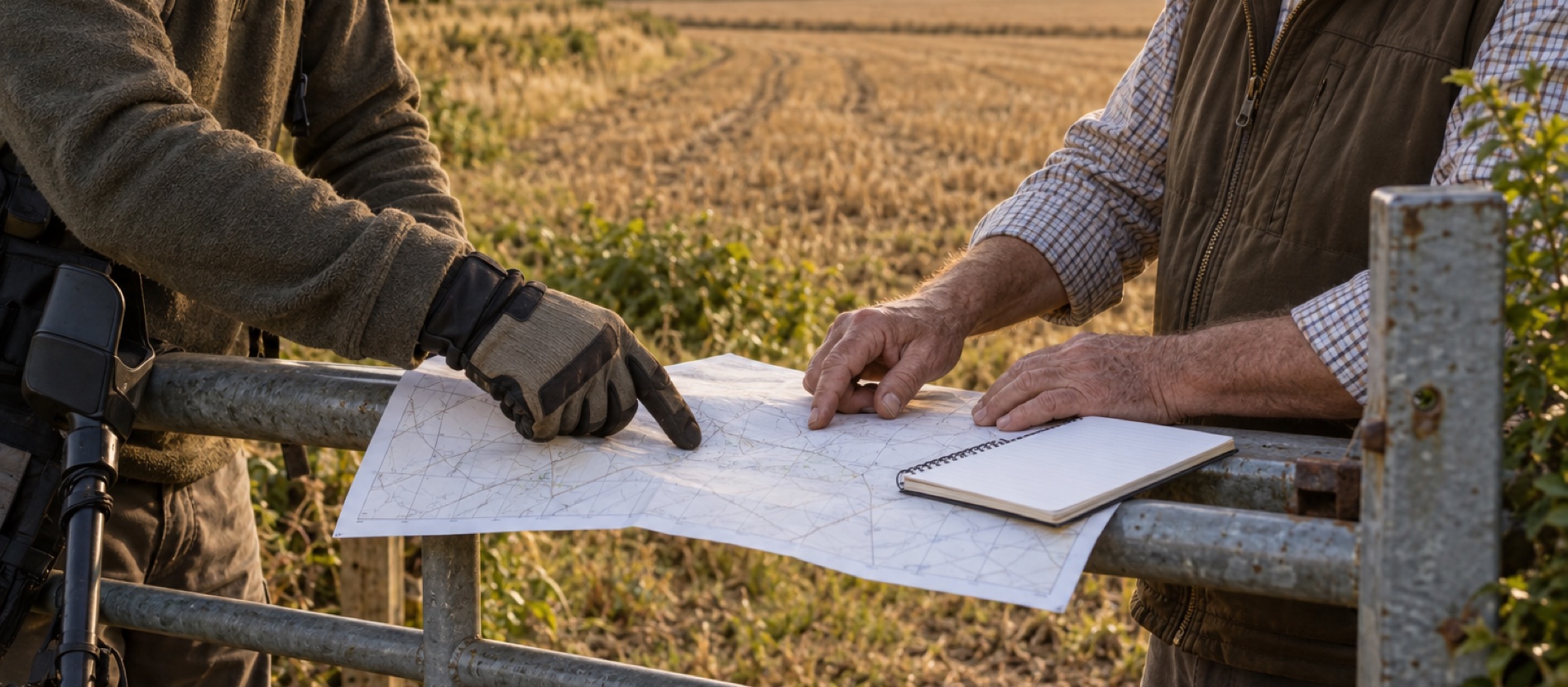
Land and period. Attach a marked map, field names and access/parking route. State start and end dates, permitted days or hours, whether guests or a club may attend, and how permission may be withdrawn. Exclude scheduled ground, crops, livestock areas, utilities, habitats and any other no-go zones.
Search and restoration. Agree acceptable tools, depth, pasture plugs or cultivated-ground technique, a no-dig rule around features, backfilling, turf replacement and removal of sharp litter. The owner may prohibit detecting in wet weather or before harvest. Write down a stop-work rule for an unexpected archaeological deposit or dangerous object.
Finds and records. Define ordinary-find custody and ownership, whether the owner wants to see every find, how findspots will be recorded and when items will be shown. State any proposed sharing of a statutory reward separately. Do not promise that the finder owns Treasure, Scottish Treasure Trove, wreck material or a third party's recently lost property. Our finds-ownership guide explains the distinction.
Reporting and follow-up. State who will promptly contact the relevant Finds Liaison Officer, Treasure Trove Unit or Northern Ireland authority when the law or responsible practice requires it. A private agreement cannot remove a reporting duty. Agree how the landowner will be kept informed and how custody will be documented if an object is taken for identification.
A useful simple structure
One page can identify the parties, map and dates; a second can cover recovery, finds and reporting. Put an initial beside any boundary change and retain the same copy on both sides. If an estate supplies its own form, read its exclusions carefully and do not add contradictory promises. For complicated ownership or valuable-find arrangements, seek independent legal advice before signing. This guide deliberately does not supply a “one size fits all” contract.
A pouch with separated pockets can help honour a recording agreement, but a notebook or tagged individual bags still matter: the key information is the find's exact place, not the accessory.
Before the first visit
Check the relevant nation's law—England and Wales, Scotland or Northern Ireland—and the official designation map for the permitted parcel. Send the landowner a concise visit plan and weather contingency. If any term remains vague, clarify it before turning the detector on. The agreement should make a responsible visit easier for both parties, not become a loophole around heritage protection.
Common questions
Frequently asked questions
Is verbal metal detecting permission enough?
A verbal invitation can be difficult to prove and may leave scope unclear. Put the authorised parties, map, dates, recovery rules and finds terms in a signed note or clear email thread.
What should a permission agreement say about finds?
Set out ordinary-find custody and ownership, recording, the landowner's notification preferences and any proposed reward sharing, while preserving all statutory reporting duties.
Can an agreement make scheduled-site detecting legal?
No. Landowner permission does not replace protected-site consent, an archaeological-search licence or other statutory restrictions.
Should a tenant sign as well as the landowner?
Often both should be consulted because ownership and occupation rights can differ. Confirm who can authorise access, digging and object recovery for the exact parcel.
Helpful products
Make recording easy in the field
A compartmented pouch and separate location notes support the reporting promise in a written agreement.

All-round field pouch
XP Finds Pouch
Best for: Regular field and wet-weather searches where quick debris storage and a separate protected pocket matter.
- Open pocket plus zipped pocket
- Washable with water drainage
- Belt, strap or MOLLE mounting
A washable belt pouch with an open debris compartment, a zipped pocket for better finds, drainage and MOLLE attachment points for a pinpointer holster or lanyard.
Know before buying: The open section is for robust scrap, not fragile objects; use a rigid finds box inside the zipped area for coins and delicate artefacts.