
Permissions & law · TREASURE 34
How to report Treasure in England and Wales
Follow the official Treasure reporting process after a metal detecting find, including the 14-day deadline, findspot records, FLO contact and next steps.
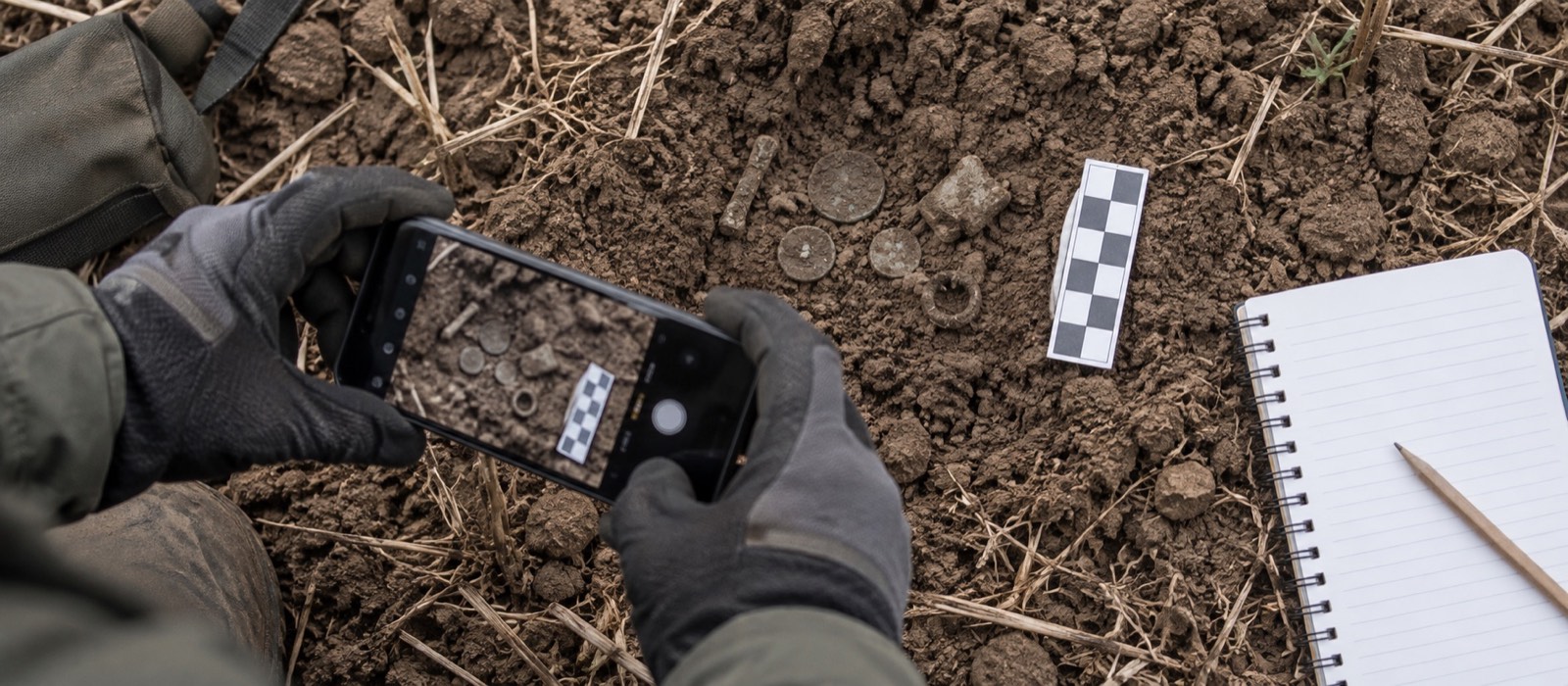
The legal definition includes several categories; age or precious metal alone is not a safe test.
Associated objects and coins found separately in the same area can form one find.
Reporting through the FLO and supplying the required details fulfils the finder’s reporting route in practice.
The 14-day rule
GOV.UK's Treasure service says potential Treasure must be reported within 14 days of first finding it or within 14 days of realising an item found earlier might be Treasure. In England and Wales, the practical first contact is the local Finds Liaison Officer. Wales also has a Treasure Registry at Amgueddfa Cymru.
Do not wait for certainty. The Finds Liaison Officer can advise whether an object appears to meet the definition. The legal duty remains with the finder even when someone else agrees to pass on the report, so obtain acknowledgement and keep the case details.
Different systems apply in Scotland and Northern Ireland. This page explains the England and Wales route only.
What can count as Treasure?
The definition has several categories. Under the current Treasure Act Code of Practice, examples include:
- a non-coin object more than 300 years old with at least 10% gold or silver by weight;
- at least two coins from the same find that are more than 300 years old and meet the precious-metal threshold;
- at least ten coins of any metal from the same find that are more than 300 years old;
- groups of at least two base-metal prehistoric objects from the same find;
- associated objects belonging to the same find as Treasure; and
- a metal object or coin at least 200 years old that meets the significance-based test introduced in 2023.
This is a practical summary, not a substitute for the statutory definition. Modified coins, composite objects, prehistoric material, earlier related discoveries and evidence of intentional concealment can change the assessment. Use the official checker or ask an FLO.
What to do at the findspot
Stop and photograph the object before cleaning. Record its location to at least a 10 m square, with enough precision to distinguish sides of a modern field boundary. Note the depth, whether the land is cultivated, how the object was positioned and what was found nearby.
If a group, container or concentrated signal continues into undisturbed ground, do not enlarge the hole simply to recover everything. Protect the location, inform the landowner and seek archaeological advice. Associated objects can include material found at different times if it was originally deposited together.
Follow the careful handling steps in what to do with an old coin. Do not clean, split up, sell or give away a possible Treasure find.
Information the FLO will need
Be ready to provide:
- the finder’s name and contact details;
- the date of discovery;
- a precise findspot and field information;
- the landowner and occupier details;
- photographs and a description of the circumstances;
- information about associated finds or previous discoveries nearby.
Contact the landowner promptly. A permission and finds agreement should already establish how discoveries are shared and reported, but the statutory duty to report Treasure rests with the finder.
What happens after reporting
The FLO or Welsh Treasure Registry staff will gather the information for a Treasure Receipt and notify the coroner. You should receive a receipt or acknowledgement. The object will normally be deposited as soon as practicable so an expert report can be prepared.
If the find may be Treasure, a report goes to the coroner. Museums can express an interest. Where a museum wants to acquire an object declared Treasure, it is valued through the Treasure Valuation Committee process. The finder and other interested parties can comment on the valuation.
Cases take time because identification, reporting, an inquest, museum interest and valuation are separate stages. Keep the case number and tell the FLO if contact details change.
A reward is not automatic
GOV.UK says the finder may receive a share when they had permission to be on the land and acted in good faith. A freeholder or occupier may also be eligible. Trespass, concealment, damage, failure to follow instructions or conduct contrary to responsible-detecting guidance can reduce or remove a reward.
Agree finds ownership before searching and keep permission evidence. Our permission-request guide covers the conversation, while the England and Wales law guide covers the wider checks.
If the object is not Treasure
A find can still be archaeologically important. GOV.UK directs culturally or historically interesting objects to the Portable Antiquities Scheme in England or PAS Cymru in Wales. Recording an accurate findspot helps researchers understand distribution, settlement and trade even when the object returns to the finder or landowner.
If the object is found on the seashore or in tidal water and may be wreck material, a different 28-day Receiver of Wreck process applies. See the official GOV.UK Treasure and wreck service rather than assuming the Treasure route covers it.
Keep the official route close
Save the GOV.UK reporting page and your local FLO contact before a field day. A blank field label, pencil, phone and rigid finds container belong in the equipment checklist. The easiest 14-day deadline to meet is the one planned for before anything important comes out of the ground.
Common questions
Frequently asked questions
How quickly must potential Treasure be reported?
In England and Wales, a find that may be Treasure must be reported within 14 days after the day it was found or the day you realised it might qualify.
Who should I contact about a possible Treasure find?
Contact the local Finds Liaison Officer, who can help assess and route the find, or follow the official coroner reporting process. Keep accurate findspot information and permission details.
Should I keep digging after finding possible Treasure?
Stop unnecessary disturbance, record the exact location and seek advice. Associated objects and their positions may be archaeologically important, and further excavation may require professional involvement.