
Finds care · FIRST RESPONSE 32
What to do when you find an old coin
Protect an old coin's surface and context with a careful UK field routine: record the findspot, avoid cleaning, store it separately and check reporting.
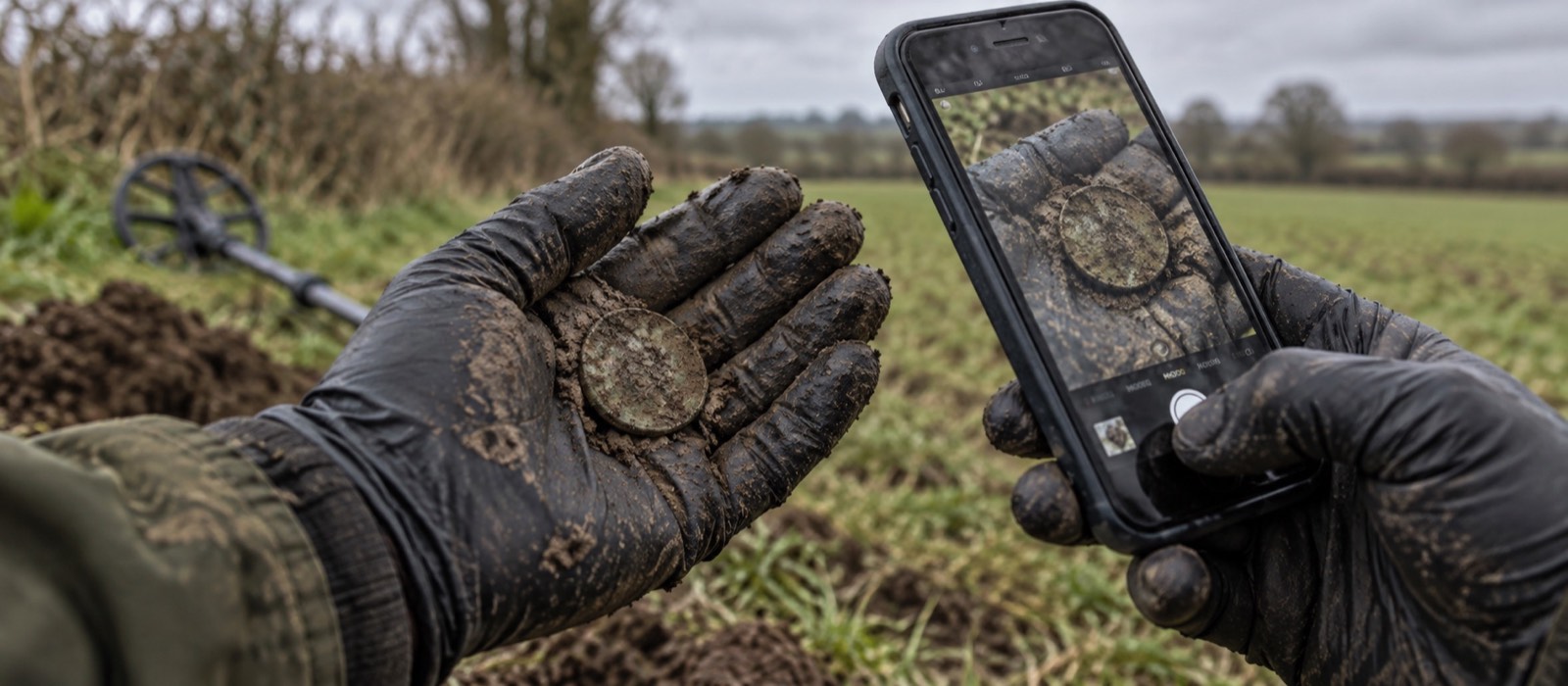
A findspot and its association with nearby objects can be more informative than a clean surface.
Rubbing wet soil across fragile patina can remove detail that cannot be restored.
A single coin and a dispersed group can have different reporting implications.
The first minute in the field
Stop swinging and keep the hole or findspot undisturbed. Photograph the coin where it appeared, then take a wider image showing its position within the field or beach. Save a precise grid reference or coordinates, note the approximate depth and record which side of any boundary it came from.
Lift only when the recovery method and permission allow it. Hold the coin by the edge or support it on a gloved palm. Do not rub the faces to reveal a portrait. Wet soil can contain grit that scratches a soft or corroded surface, and apparently solid patina may be the only surviving detail.
Check for association before moving on
Rescan the hole, spoil and a small area around it without immediately widening the excavation. A second coin, fragment or connected object changes the significance of the find. A series of coins recovered near one another over time may form a dispersed hoard rather than unrelated losses.
If more objects appear together, stop and record the group in place. Do not chase a concentrated signal below the agreed ploughsoil or into a compact archaeological layer. Contact the landowner and seek advice from a Finds Liaison Officer. Our Treasure reporting guide explains the statutory route in England and Wales.
Do not clean an unidentified coin
Avoid water, toothbrushes, metal picks, oils, acids, electrolysis and commercial coin cleaners. Each can remove corrosion products, plating, silvering, surface enrichment or residues that help identification. Even gentle rubbing can flatten lettering on a thin hammered coin.
Dry loose soil is sometimes safer left alone until an expert has seen photographs. If the object is wet, fragile, flaking or actively powdering, do not experiment with drying or sealing treatments. Ask the local Finds Liaison Officer or a qualified conservator how to stabilise that material.
The British Museum's Portable Antiquities Scheme overview explains how locally based Finds Liaison Officers record archaeological discoveries. It also advises people not to post finds to the museum; make contact first.
Package it separately
Use a small rigid box or finds pot so the coin cannot bend or rub against modern rubbish. Place sharp waste in a different compartment. Add a temporary label that links the object to the field record without writing on the coin.
A useful record includes:
- permission or field name;
- precise findspot;
- date and approximate depth;
- soil and object condition;
- nearby or associated finds;
- photograph filenames or a field-log number.
Do not attach adhesive tape to the object. Avoid cotton wool directly around a fragile surface because fibres can catch on corrosion. Keep the container cool, dry and secure until advice is available.
Identify without forcing detail
Start with diameter, thickness, weight and metal colour where it is already visible. Note whether the coin is struck or cast, round or clipped, and whether any bust, shield, cross, date or letter can be seen without rubbing. Photograph both faces in diffuse daylight with a scale.
Rotate the photographs rather than the coin to test possible orientations. Image enhancement can reveal contrast without changing the object. Do not rely on a detector target ID to determine metal or age; the same number can represent many conductors.
The target-ID guide explains those limitations. For potentially recordable archaeology, contact the Portable Antiquities Scheme in England or PAS Cymru in Wales rather than relying only on social-media identification.
Is one old coin Treasure?
Age alone does not decide it. Under the current Treasure framework, groups of coins can qualify according to age, number, precious-metal content and association. A single coin normally does not qualify under the ordinary coin categories, but it can qualify when modified into an object, associated with other Treasure or captured by the significance-based class.
If in doubt, report promptly. GOV.UK says potential Treasure must be reported within 14 days of finding it or realising it may be Treasure. The official reporting page is the authority, and different systems apply in Scotland and Northern Ireland.
Tell the landowner
Follow the finds agreement made before detecting. Recordable or valuable does not automatically mean the finder owns the coin. Inform the landowner or authorised occupier, keep a clear record of where the object is held and do not sell or give it away while reporting or ownership is unresolved.
For future searches, add a rigid finds box, blank labels and a pencil to the equipment checklist. Good finds care begins before the first signal.
Common questions
Frequently asked questions
Should I clean an old coin immediately?
No. Do not rub, scrape or apply chemicals before identification. Loose soil can protect fragile surfaces, and an inappropriate cleaning method can permanently remove evidence and value.
What details should I record for an old coin find?
Record an accurate grid reference or map pin, the date, landowner permission, depth and nearby associated objects. Photograph the coin and findspot before details are lost.
When should I contact a Finds Liaison Officer?
Contact the local officer when a find may be archaeologically important, unusual or difficult to identify. If it may meet the legal definition of Treasure, follow the statutory reporting process promptly.