
Starting out · KIT LIST 15
Metal detecting equipment checklist for UK beginners
Pack the essential metal detecting equipment for a UK field or beach without buying unnecessary accessories or unsuitable recovery tools.
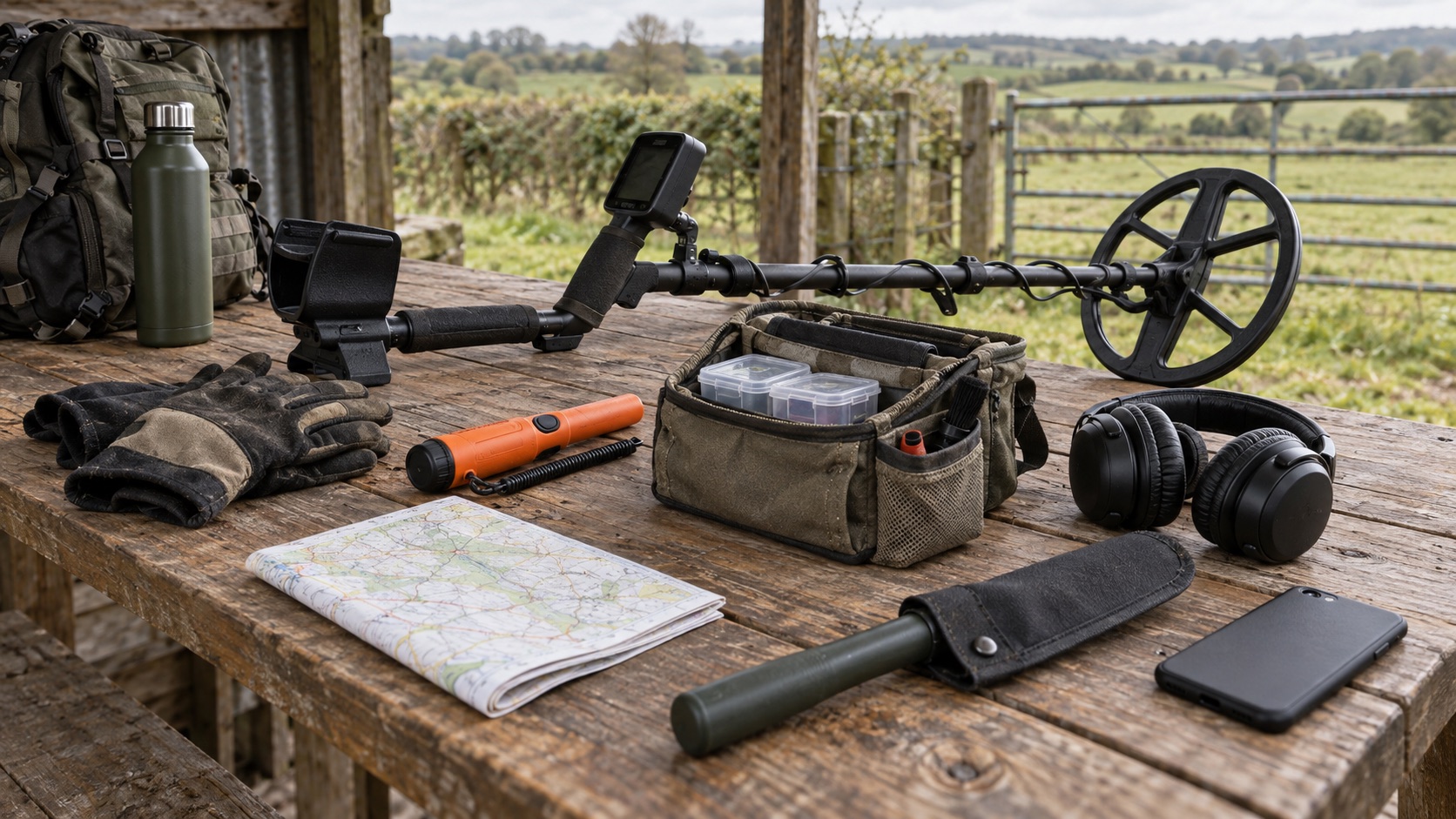
Match every digging or scooping tool to the landowner's conditions and the surface being searched.
Keep potentially fragile finds separate from sharp scrap and loose modern coins.
Check connector, wireless and waterproof compatibility before buying detector accessories.
Essential equipment
Metal detector
Choose the detector for accessible ground, not an imagined once-a-year trip. Inland permissions place a premium on manageable weight, clear audio and controls you understand. Regular wet-salt beach use makes ground handling and whole-machine waterproofing more important. The detector finder narrows the current shortlist by ground and control preference.
Before leaving, check the coil bolt, shaft locks, charging-port cover and cable routing. Carry the manual on your phone and know which components are actually waterproof.
Handheld pinpointer
A pinpointer searches the plug, hole and loose spoil after the detector has located the area. It can reduce hole size and recovery time, particularly for small targets. Look for reliable retuning, useful sensitivity control, a secure holster and waterproofing appropriate to the site.
The Garrett is the broad all-round choice, but it is not the only sensible one. The pinpointer comparison covers Minelab and Nokta alternatives and explains when extra sensitivity or replaceable tip covers matter.
Site-appropriate recovery tool
For short grass, a narrow hand tool may allow a controlled plug where the landowner permits it. Cultivated soil may suit a compact spade. Loose dry sand is usually faster with a scoop. No tool creates permission to dig, and one included in a detector bundle is not automatically right for every surface.
Avoid using a pinpointer to pry stones or cut roots. Keep blades clean, covered during transport and away from livestock and the public.
Finds pouch with separate scrap space
Carry every piece of sharp metal and litter out. Use one section for modern rubbish and a separate padded container or small boxes for fragile or potentially important objects. Rubbing several finds together in a general pouch can remove surfaces and context before identification.
Gloves and personal safety kit
Wear robust gloves for handling soil, corroded metal and glass, but use care around any sharp or hazardous object. Pack drinking water, weather layers, sun protection as needed, a basic first-aid item and a charged phone. Tell someone the location and expected finish time when searching alone.
Equipment that depends on the site
Headphones
Headphones can make weak or mixed signals easier to hear and reduce disturbance. Confirm the detector's socket size, adaptor needs and wireless system before buying. Ordinary wireless headphones may introduce noticeable latency; model-specific low-latency systems avoid the sound arriving after the coil has moved.
Do not block situational awareness near roads, livestock, machinery, other beach users or water. Waterproof detectors need separately rated headphones for submerged use.
Sand scoop
A scoop earns its weight on loose beach material. Hole size, handle length and construction should match dry sand, compact wet sand or shallow water. Rinse salt away after use and fill every excavation even when the next tide will move the surface.
Spare coil
A small coil can separate adjacent targets and work between stubble; a larger coil covers open ground and may improve response to larger deep objects. Begin with the supplied coil. Buy another only when repeated searches reveal a specific access or separation problem.
Harness or support
A harness can help with a heavy detector or long session, but first correct shaft length and arm-cuff position. A poorly adjusted lightweight machine can be more tiring than a balanced heavier one.
Power, cleaning and small spares
Carry the correct spare batteries in a dry protective case, or a charged power bank only if the manufacturer permits field charging. A soft brush and cloth remove loose soil; fresh water is important after salt exposure on components approved for rinsing. Never open a charging port or battery cap while wet or gritty.
A few cable ties, a spare manufacturer-approved coil bolt and resealable bags can solve ordinary problems. Do not wrap an electronic fault and continue using the detector in water.
What a starter bundle does and does not solve
The X-TERRA Voyager includes wired headphones, a backpack and collapsible digger, which can reduce initial shopping for occasional inland or dry-sand use. It still needs a pinpointer, gloves and organised finds storage, and only its coil is waterproof.
Compare the main detector specification before valuing bundle extras. Several low-quality accessories do not compensate for unstable operation, excessive weight or unsuitable waterproofing.
Pack by sequence
Organise the bag in the order the day unfolds: permission details and phone accessible first; detector power and headphones next; pinpointer and recovery tools on the belt; finds storage easy to reach; cleaning items left in the vehicle. This reduces the temptation to put a pinpointer or find on the ground and forget it.
Use the first-day metal detecting plan to turn the checklist into a complete session. At the end, count tools, remove all scrap and inspect seals before storing damp equipment.
Common questions
Frequently asked questions
What equipment is essential for a first detecting trip?
Take the detector, suitable batteries or charge, an agreed recovery tool, finds pouch, gloves, footwear and evidence of permission. A phone, water and a basic first-aid kit are sensible additions.
Do I need a pinpointer immediately?
No, but it can make target recovery faster and reduce unnecessary disturbance. You can begin without one by rechecking the plug and spoil carefully with the detector coil.
Are headphones necessary for metal detecting?
They are not compulsory, but they make quieter responses easier to hear and reduce disturbance to other people. Confirm whether your detector uses wired, proprietary wireless or Bluetooth audio before buying.