
Starting out · BUDGET PLAN 22
How much does metal detecting cost to start?
Build a realistic UK metal detecting starter budget, covering the detector, pinpointer, recovery tools, safety kit and the costs beginners often miss.
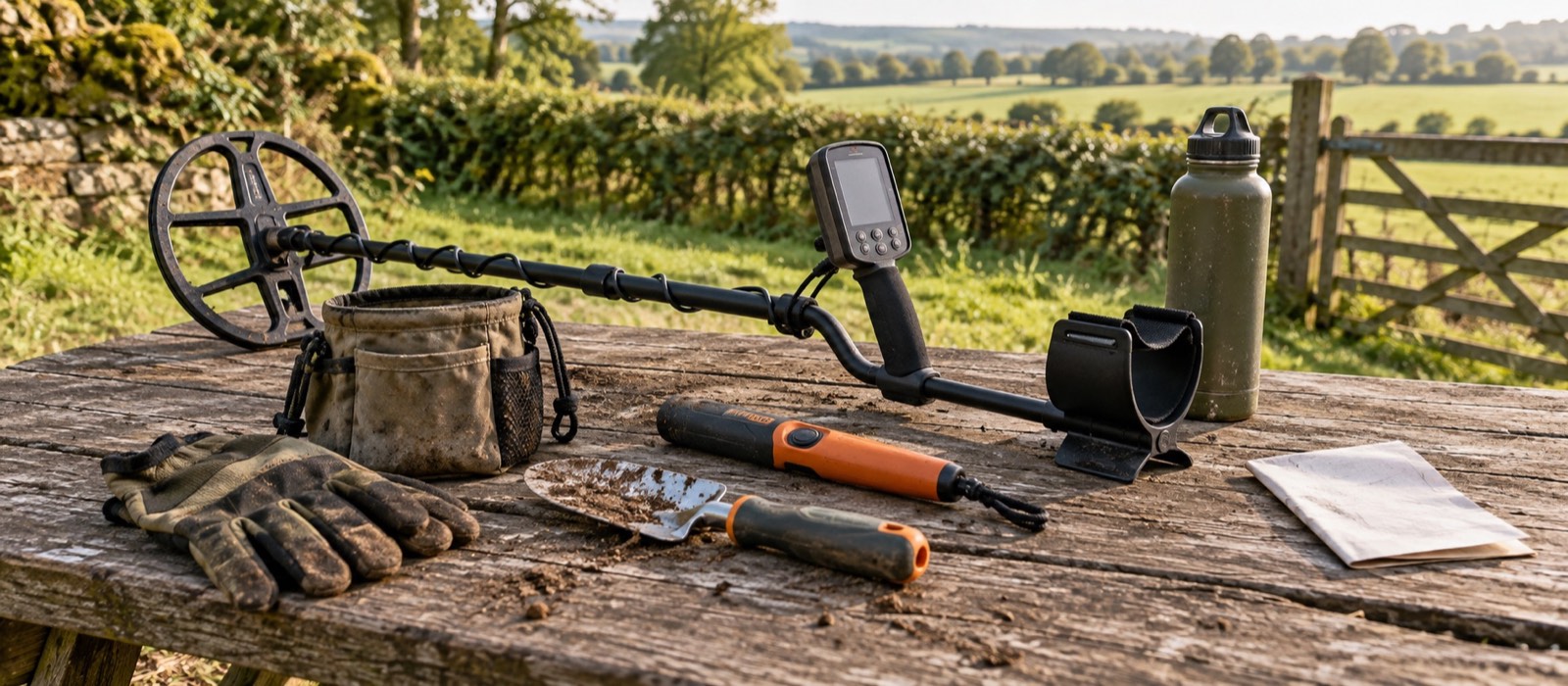
Put most of the budget into the detector and buy only the recovery tools your permission allows.
A pinpointer saves time and reduces unnecessary digging, but it does not compensate for poor detector choice.
Travel, batteries, club fees and permission conditions can matter more over a year than another gadget.
A realistic first-year budget
For a new detector with a useful warranty and a basic field kit, roughly £250 to £450 is a practical planning range. A lean setup can come in lower when existing boots, waterproofs and gloves are suitable. A more capable mixed-ground detector, dependable pinpointer and specialist recovery tool can take the total beyond £500.
Prices move, so treat these as planning bands rather than promised totals. The detector should normally receive about two-thirds of the initial budget. The remainder covers safe recovery, protection, finds storage and power.
Three sensible ways to allocate the money
Lean start: around £200–£300
Choose a credible entry detector, use wired headphones if supplied, and begin with gloves, a finds pouch and one landowner-approved hand tool. Delay the pinpointer rather than buying an unreliable detector bundle. This route suits dry inland permissions and occasional use, provided the chosen control box is protected from rain and water.
The SIMPLEX Lite is an example of a starter detector that includes full waterproofing and a rechargeable battery rather than relying on a pile of accessories. Its fixed 15 kHz operation is straightforward, but a single-frequency design is not our first choice for regular wet salt sand.
Balanced setup: around £350–£500
This is the useful middle ground for most beginners. It can cover a detector with stronger mixed-ground ability, a reputable pinpointer, gloves, pouch and a suitable digging tool. The VANQUISH 360 is light and uses automatic Multi-IQ, making it relevant for someone who expects to move between fields and beaches without learning a dense settings menu.
Step-up start: £500 and above
A higher budget can buy detailed tone controls, selectable or simultaneous frequencies, more robust shafts and deeper waterproofing. Spend here only when a real requirement justifies it: frequent wet-sand use, regular shallow-water work, difficult ground or a need for a specific control. A premium detector does not include permission, experience or certainty about a target.
Our sub-£300 guide and sub-£500 guide separate useful capability from extra complexity.
What each part of the kit should cost you in attention
The detector is the largest purchase, but every item should solve a field problem:
- Detector: stable operation on your normal ground, manageable weight and controls you will learn.
- Recovery tool: the smallest tool suitable for the agreed surface; a full spade is not appropriate everywhere.
- Gloves and pouch: hand protection plus separate space for sharp modern rubbish.
- Headphones: clearer audio and less disturbance to other people; check connector and wireless compatibility.
- Power: spare approved batteries or a charged power bank where the manual permits it.
- Pinpointer: faster, narrower recovery once the main detector has located the target area.
A dependable pinpointer is often the first upgrade worth making. The Garrett PRO-Pointer AT is a robust waterproof example, but lower-cost verified choices are compared in our pinpointer guide.
Costs beginners commonly miss
Travel can dominate the hobby if every search involves a long drive. Start with a lawful local permission and learn it carefully. Club membership or organised-dig fees vary, as do insurance arrangements and event charges. None of them replaces the landowner's authority for the exact land being searched.
Allow for replacement coil covers, gloves, batteries and cleaning materials over time. Salt and mud shorten equipment life when maintenance is skipped. Our equipment checklist separates essentials from optional items, while the headphone guide explains compatibility traps.
Where not to spend first
Avoid mystery bundles whose accessory count is the main selling point. A weak pinpointer, oversized spade, generic headphones with the wrong connector and an unnecessary carry case do not improve detection. Do not pay extra for claims about “long-range” detection, guaranteed target identification or dramatic depth without a clear manufacturer specification.
Coils are a later purchase. Learn the supplied coil across several sessions before choosing a smaller coil for dense iron or a larger one for open coverage. Likewise, a harness can redistribute weight but will not make a poorly balanced detector comfortable.
Buy after permission, not before it
The ground you can legally search should shape the kit. A beach plan may justify full waterproofing and simultaneous multi-frequency operation. A pasture permission may make weight, recovery control and battery life more important. Read how to get permission and plan a first field day before ordering accessories.
Common questions
Frequently asked questions
What is a realistic budget to start metal detecting?
Budget for a credible detector plus the recovery and safety equipment needed for your intended ground. A complete, usable kit is more important than spending the entire amount on the detector alone.
Is buying a used metal detector a good idea?
It can offer good value if the detector is genuine, complete and working. Check the coil, cable, charging port, battery condition, shaft locks and any remaining warranty before buying.
Are there ongoing costs after buying a detector?
Possible costs include batteries, travel, club membership, replacement coil covers and worn recovery equipment. Permission should never be assumed to be included with a detector purchase.