
STARTING OUT · BUYING DECISIONS
New or used metal detector: which should you buy?
Compare new and second-hand metal detectors in the UK, including condition checks, waterproof seals, warranty questions, seller rights and whole-kit cost.
Price the missing charger, coil cover and other essentials.
Ask for a live function check, not just a powered-on screen.
Check who is selling; buyer protections differ.
Start with the whole cost
A second-hand listing may look inexpensive until you add a replacement coil, charger, headphones, worn shaft clamp and transport. Compare it with the current new price of a similar supported model, not the seller's recollection of what they paid. For an inland beginner, a new Nokta SIMPLEX Lite offers a known current model, full-detector waterproof rating and manufacturer support to benchmark against. It is not automatically the best purchase; it clarifies what the used saving must compensate for.
Our best used metal detectors guide names models worth inspecting, while the under-£200 guide shows why a new starter can sometimes narrow the gap. Prices move, so use the current listing at the moment you buy.
What new buys you
The advantage is a known starting condition, supplied accessories, current manual and a clearer route if something arrives faulty. But “new” does not make a machine suitable: a waterproof coil is not a submersible control box, and a complex interface can make a first week frustrating. Compare the recipient's ground and learning style using our beginner detector guide.
The maker's warranty terms and registration rules should be read for the exact model and UK seller. Do not assume a warranty transfers with a privately sold detector. Statutory consumer rights and manufacturer warranties are different things; keep the retailer invoice and serial number.
What to test on a used detector
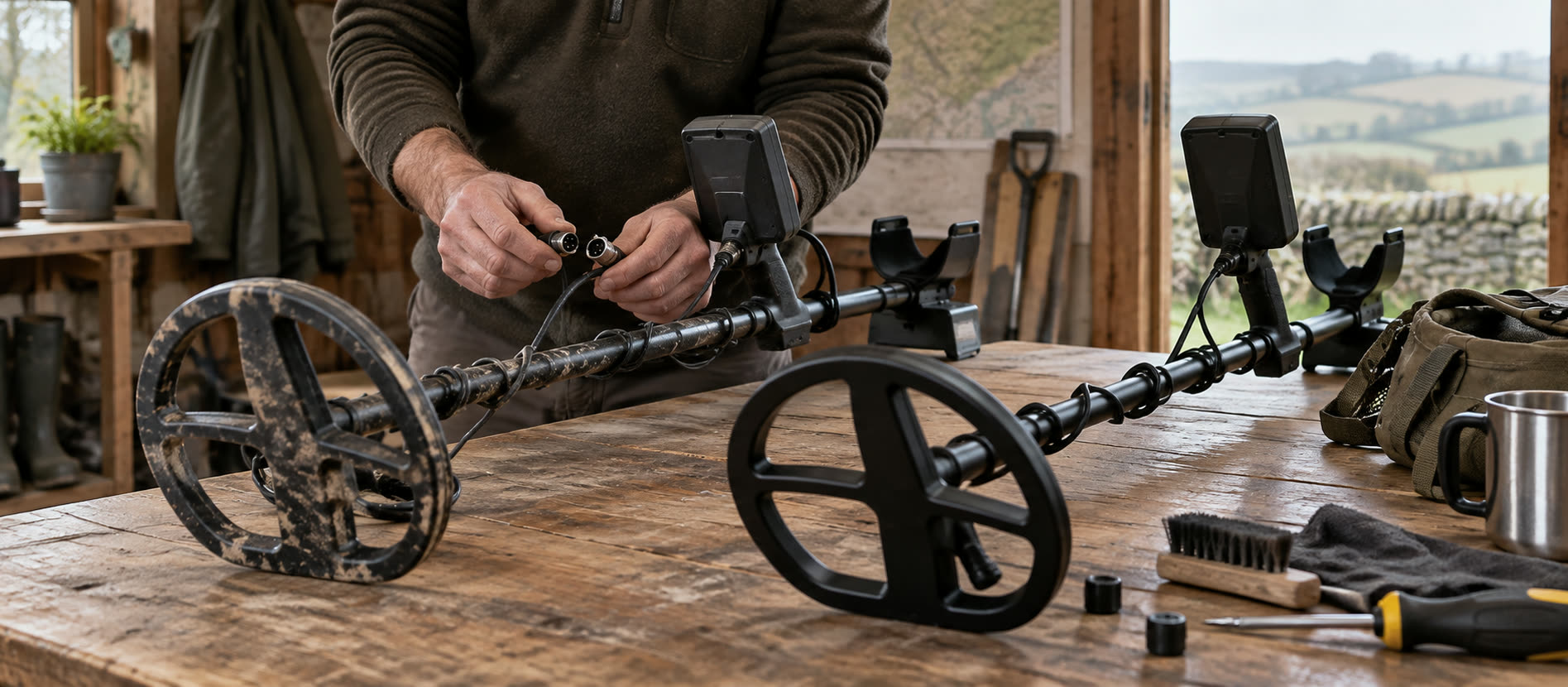
Ask for the precise model, serial number, original purchase proof if available, all included coils and the reason for sale. Inspect the coil for cracks, worn ears and damaged cover; follow the cable to the connector for crushed or repaired sections. Check shaft locks, arm cup, buttons, headphone socket, charging port and battery compartment. A swollen rechargeable battery, corrosion or DIY wiring is a reason to walk away.
Turn the machine on with its actual coil attached. Check the display, buttons, audio, pinpoint function and several known metal objects at modest sensitivity, away from electrical clutter. An air test proves only that the detector responds; it cannot prove field depth or stability. If possible, test on ground similar to your intended use with permission. Ask whether firmware is current, but never install an update during a rushed handover.
For a detector advertised as waterproof, inspect seals and connector threads and ask about salt-water history. You cannot reliably certify an old seal by looking at it. Treat “never leaked” as a seller statement, not a pressure test; if water use is essential, a new machine or authorised service may be worth the premium. The coil cable guide shows symptoms to watch for.
The seller changes your remedy
Ask whether you are buying from a trader or a private individual, including on a marketplace. UK government second-hand product guidance advises checking instructions, modifications and recalls. Consumer remedies differ between trader and private sales, and a private listing should not be treated as a retailer guarantee. Read the platform rules and retain the description and messages. If the seller will not identify the machine or demonstrate it functioning, pass.
Whichever route you choose, reserve money for appropriate recovery kit and permissions. A cheap detector you cannot use safely or repair is poor value; a carefully checked used detector can be entirely sensible when its condition and saving are real.
Common questions
Frequently asked questions
Is a used metal detector good value for a beginner?
It can be if the exact unit works, support remains available and the saving covers any missing or worn parts. Compare total cost with a current new model.
Can I rely on the original waterproof rating of a used detector?
No. Damage, ageing seals or incorrect assembly can change the real water boundary. Ask about history and seek authorised service if submerged use matters.
Does the manufacturer's warranty transfer to a second owner?
Do not assume so. Read the exact brand and model terms, and ask for proof of purchase and any required registration details.
Are private and dealer used purchases protected alike?
No. The seller's status changes your remedies. Identify whether the seller is a trader or private individual and keep the description and messages.
Helpful products
A current new-model benchmark
Compare any used asking price with a current supported detector of similar capability, rather than its original retail price.

Lower mid-range
Nokta SIMPLEX Lite
Best for: A cost-conscious beginner who wants full waterproofing, vibration and more adjustment than the simplest starter machines.
- 15 kHz single frequency
- Whole detector to 5 m (IP68)
- 1.2 kg
A 15 kHz entry model with four modes, 30 sensitivity levels, automatic or manual ground balance and a fully submersible 5 m build.
Know before buying: It is single-frequency and lacks the ULTRA model's recovery-speed and tone-shaping controls; wet salt sand is not its strongest ground.