
Technique · IRON RESPONSE
Metal detector iron bias explained
Understand what iron bias changes, how it differs from discrimination and recovery speed, and when a lower or higher setting helps on UK iron-rich ground.
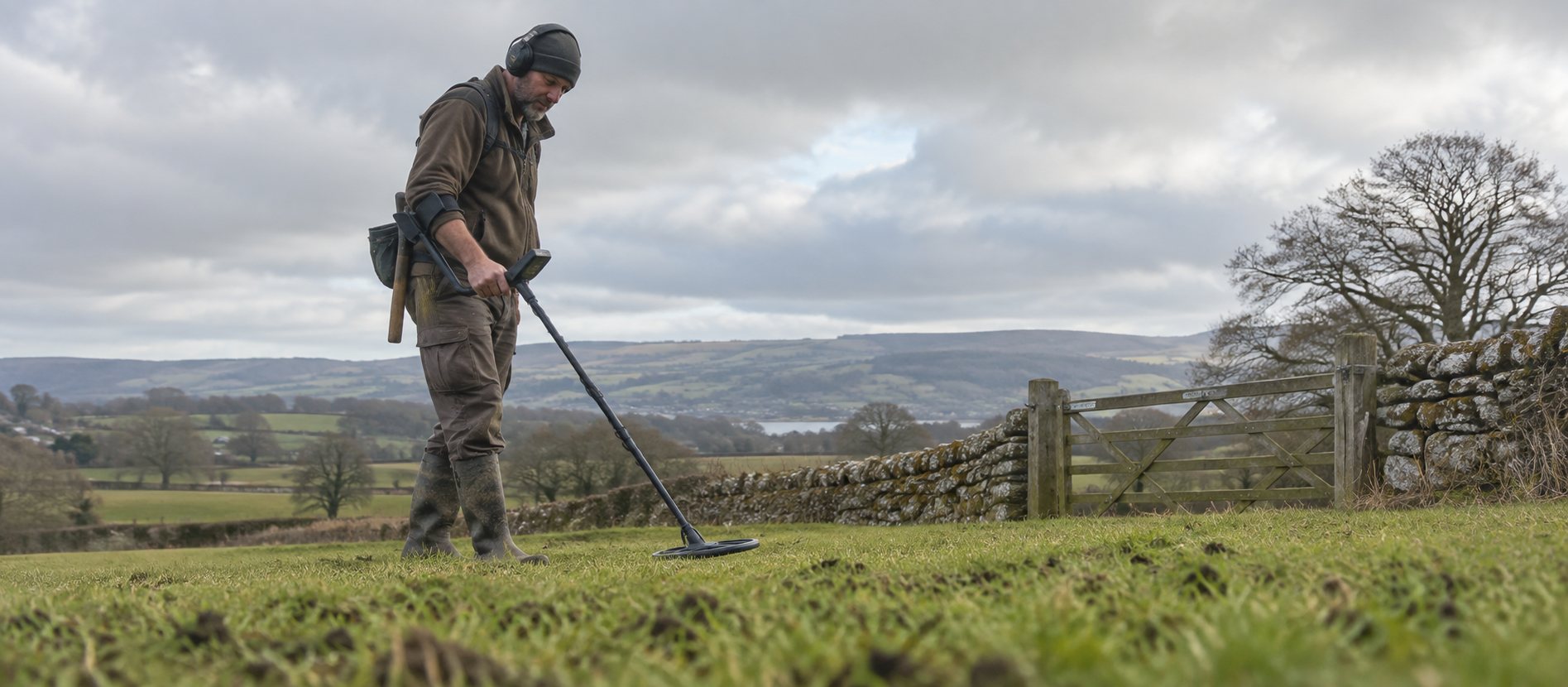
Iron bias, iron volume and discrimination are separate controls.
Less iron noise is not always more information.
Compare the same mixed-target response from two directions and one setting at a time.
What iron bias does
Ferrous objects can give mixed responses. A straight nail may sound plainly iron-like, while a bent nail, rusted washer or bottle cap can produce a brief high tone. Iron bias is a processing preference that makes ambiguous responses more likely to be classified as iron. Minelab's iron-bias explanation describes its purpose as reducing misleading iron responses.
A higher setting can make a site calmer. It can also make a non-ferrous target close to iron report as ferrous or become less distinct. That is the real trade-off: fewer tempting false positives versus the risk of overlooking a difficult mixed target. There is no setting that perfectly separates every coin from every nail.
It is not discrimination or iron volume
Discrimination rejects response ranges you choose. Iron bias influences how the detector interprets an uncertain iron-containing response before or alongside that classification. Iron volume changes how loudly accepted ferrous responses play. You may be able to hear iron quietly while retaining information rather than silencing it altogether.
Recovery speed is another distinct control. It changes how quickly separate nearby responses can be reported. Raising recovery speed does not automatically decide whether a mixed signal is iron. Changing all these controls at once makes field results impossible to interpret.
When a higher setting helps
Modern parks, bottle-cap patches and farm ground with bent iron can be tiring when every object gives a non-ferrous edge tone. A moderately higher bias may reduce the number of misleading high chirps and allow you to work more consistently. That benefit is practical, not a guarantee of better finds.
Test with actual site rubbish. If the detector stops sounding on common caps but still reports a modern coin placed near a nail, the change may be useful. Do not raise bias merely because the screen shows many negative IDs; audible iron can reveal where past activity was concentrated.
When lower may be worth the extra noise
On a known iron-rich permission, a weak non-ferrous target may sit directly beside nails. A lower bias can let more of that ambiguous response through for inspection. You will probably dig more iron. It may also make the audio busier and more tiring. Work a small patch deliberately rather than applying a low setting across a large field before you understand it.
Use short sweeps, keep the coil close and rotate around the signal. If a compact non-ferrous note repeats between the iron sounds from more than one direction, investigate within the landowner's recovery rules. A target that only chirps at the far edge of the coil is less persuasive, though never categorically impossible.
Why model names matter
The X-TERRA ELITE technical specification lists adjustable iron bias from -1 to 2. That gives an operator a small, testable range. The VANQUISH 360 specification lists iron bias as fixed high. Do not search for an adjustment menu that the second detector does not have.
The X-TERRA ELITE also provides a larger supplied coil and more settings. On dense iron, a compatible smaller coil may be a better first change than moving the bias repeatedly. Its Multi-IQ capability, waterproofing and iron bias are separate benefits.
A controlled nail-and-coin test
On permitted ground, place a modern coin and iron nail on the surface at least a coil width apart. Confirm each response. Move them closer in small steps, keeping their orientation fixed. Sweep at your normal pace from two directions in the factory mode. Note where the coin becomes broken or disappears.
Change iron bias by one step, not from minimum to maximum. Repeat the exact test and compare the sound. Move the nail from beside the coin to just above it to see why physical masking is harder. Restore the setting afterwards if you cannot hear a useful improvement.
This is a demonstration, not a laboratory depth test. Real soil, corrosion and target positions vary. Take every test item away when finished.
Coil and sweep matter more than the menu alone
A large coil detects a broader patch and may combine several iron objects with the target. A smaller coil reduces the area being processed at once. The search-coil guide explains the coverage and separation trade-off. Keep the coil level and avoid hitting stubble; a high chirp caused by coil impact cannot be fixed with iron bias.
Also read a broken signal in context. One-way sound, changing width, negative flashes and a distant iron response are clues, not a verdict. Dig a representative sample of doubtful targets on a new permission so the site teaches you what its iron sounds like.
A sensible default
Begin with the factory bias, mild discrimination and a stable sensitivity. Change bias only when the character of the site's iron gives you a reason. If the new setting merely makes the day quieter but also erases test coins near iron, it is not an improvement for a historical field.
Common questions
Frequently asked questions
What does iron bias do?
It influences how a detector classifies ambiguous responses containing iron. Higher bias can reduce misleading high tones from iron but may also hide a desirable target close to it.
Is high or low iron bias better?
Neither is universally better. Higher can calm an iron-littered site; lower may expose more mixed responses at the cost of digging more iron. Test one step over the same targets.
Is iron bias the same as discrimination?
No. Discrimination rejects chosen response ranges, while iron bias influences the treatment of an ambiguous iron-containing signal. Iron volume controls loudness and is different again.
Can I adjust iron bias on the VANQUISH 360?
No. Minelab lists its iron bias as fixed high. X-TERRA ELITE lists an adjustable range, so settings advice must use the exact model.
Helpful products
Adjustable versus fixed iron handling
X-TERRA ELITE offers an iron-bias setting; VANQUISH 360 uses a fixed high bias. That difference matters more than a shared target-ID range on nail-rich ground.

Upper mid-range
Minelab X-TERRA ELITE
Best for: Regular field, park and beach use where stable mixed-ground performance and detailed controls justify a higher budget.
- Multi-IQ; 15 kHz inland option
- Whole detector to 5 m (IP68)
- 1.3 kg
Multi-IQ simultaneous multi-frequency operation, six search profiles and a 5 m waterproof build make this a capable step-up detector for varied UK ground.
Know before buying: Its larger coil and deeper menu demand more concentration than a simple starter model, and wireless audio uses Minelab's compatible low-latency system rather than ordinary Bluetooth.

Mid-range
Minelab VANQUISH 360
Best for: Parks, fields and beaches for a beginner who wants simple controls and one detector for varied ground.
- Multi-IQ simultaneous multi-frequency
- Whole detector to 5 m (IP68)
- 1.16 kg
Automatic simultaneous multi-frequency operation, a low 1.16 kg weight and full 5 m waterproofing make this the least complicated route into mixed UK ground.
Know before buying: The deliberately simple control set offers less room to tune audio and recovery behaviour than the X-TERRA PRO.