
FINDS CARE · IRON
How to store iron metal detecting finds
Separate and document iron metal detecting finds, recognise warning signs of active corrosion and know when to ask a conservator before drying or cleaning.
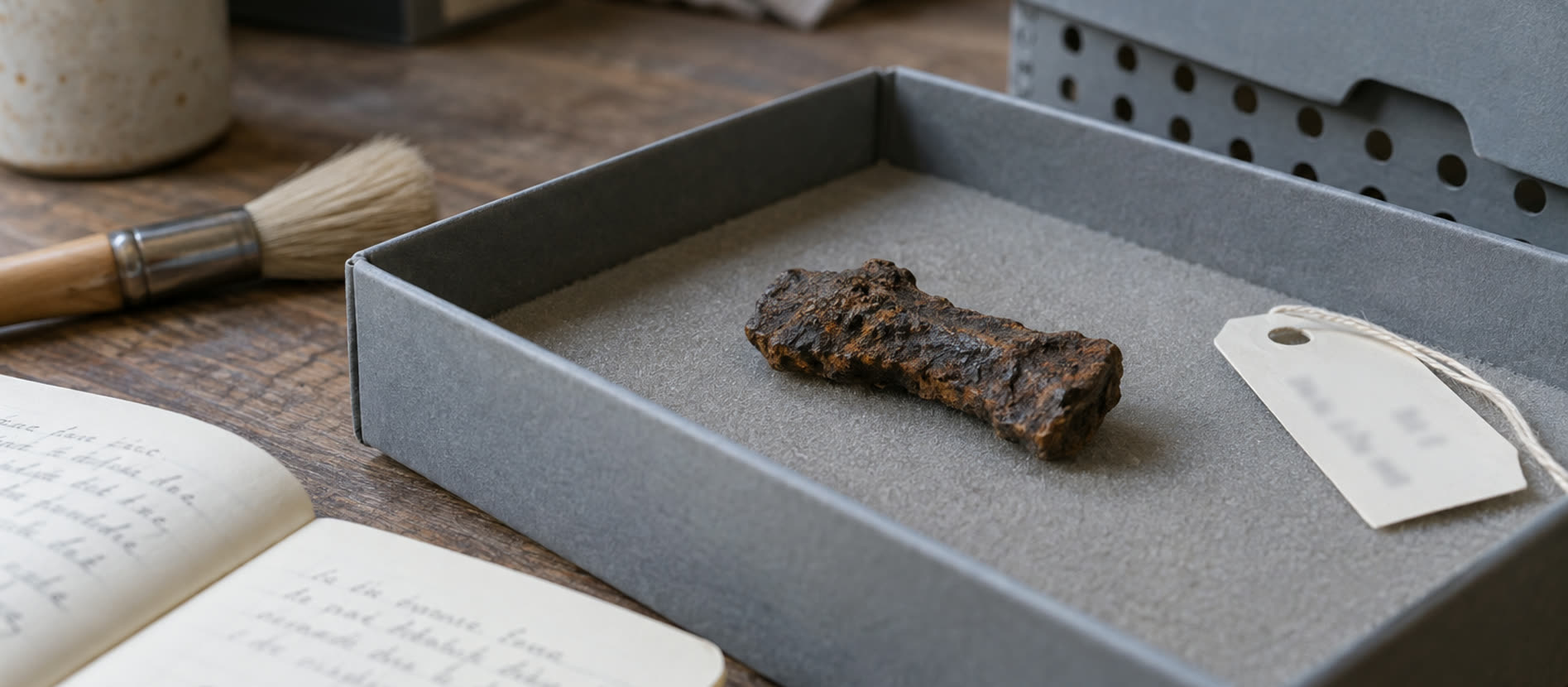
Photograph and label the find before any treatment.
Keep unstable iron separate from other objects and monitor changes.
Do not apply oils, rust converters or electrolysis to an archaeological find.
Why recovered iron can deteriorate
Burial conditions and later exposure to air and humidity are different environments. A seemingly solid iron fragment may crack, flake or shed powder after recovery. Salts from soil or a beach can complicate treatment. Historic England's archaeological conservation guidance treats assessment, stabilisation and controlled storage as specialist work. The goal for a finder is not to make iron shiny; it is to avoid making it worse before assessment.
Do not assume every rusty nail is an archaeological object. Equally, do not throw away a corroded fitting that was attached to another object or came from a meaningful group. Keep the field context connected to the physical fragment.
The first hour after recovery
Photograph an unusual object in place if it is safe and lawful to recover, and record its exact position, approximate depth, soil condition and any associated material. Give it a field number, then support it in its own rigid container so that a fragile crust is not crushed by scrap. Keep the label with the container, not stuck to the object.
If the piece is wet, crumbling, unusually large or associated with a feature, stop and ask an FLO or a qualified conservator how to transport it. Do not put a wet object in a sealed bag for weeks or force-dry it beside a radiator. Those are changes of environment, not neutral storage choices.
The pouch is only a carrier for a separate rigid, labelled container on an ordinary permitted search. A soft compartment on its own will not protect flaking iron. For suitable pouches and their limitations, see the finds-pouch comparison.
What to do at home
Keep iron separate from coins, lead and clean tools. Choose a clean, stable indoor location away from condensation and damp outbuildings. Note the condition when stored, then make comparison photographs without scraping. Fresh orange powder, expanding cracks or fragments falling away are reasons to seek conservation advice rather than to experiment.
Avoid household rust removers, vinegar, electrolysis, wire wheels, oil and clear varnish on archaeological iron. They may remove original surface, detach associated material or complicate later treatment. Historic England's conservation service overview is a better starting point than a generic DIY-restoration tutorial.
When reporting comes first
A potentially archaeological iron object in England or Wales can be discussed with the Portable Antiquities Scheme. If it is part of a group, container or intact layer, stop further recovery and preserve the group context. Scotland and Northern Ireland use different reporting routes. Ownership and legal reporting should be resolved before destructive treatment, display or sale.
Common questions
Frequently asked questions
Should I remove rust before storing an iron find?
Not on a possibly archaeological object. Rust layers may include original surface or attached evidence, and home treatment can cause damage.
Can I seal damp iron in a plastic bag?
Do not assume that is safe for long-term storage. Moisture can drive corrosion; ask a conservator or FLO how to package wet or unstable iron.
What are warning signs of active iron corrosion?
New orange powder, cracking, flaking or fragments falling away warrant isolation, comparison photographs and specialist advice.
Does a finds pouch protect iron long term?
No. It can carry a labelled rigid container in the field, but stable long-term storage depends on the object's condition and environment.
Helpful products
A field carrier, not a conservation box
Use a pouch to carry a labelled rigid container during normal field travel. Iron storage itself needs condition-specific advice and a stable environment.

Compact branded pouch
Minelab Finds Pouch
Best for: Detectorists who prefer a small, uncomplicated pouch and already carry a separate finds box for delicate objects.
- Hip-mounted finds storage
- Lightweight shell construction
- Compact field format
A compact waist pouch intended to keep ordinary finds and small tools at the hip, with a lightweight format that is easy to add to a basic field kit.
Know before buying: The shell pouch is not a substitute for individual bags, labels or a rigid box when precise findspots and fragile surfaces need protecting.