
Field kit · FINDS POUCHES 40
Best metal detecting finds pouches
Compare three metal detecting finds pouches for UK fields and beaches, with practical advice on protected storage, drainage, fit and rubbish separation.
Our recommendations
Three useful UK finds pouches
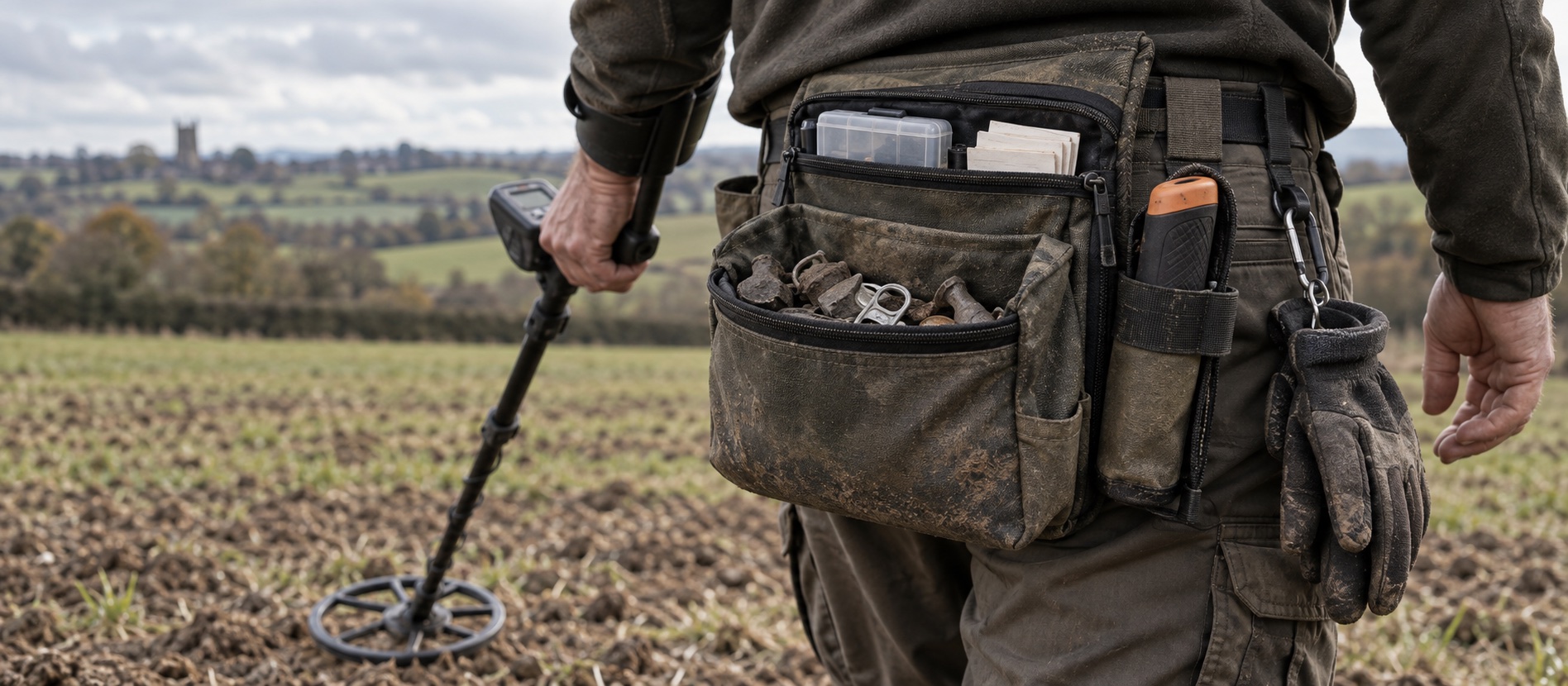
A good pouch should make responsible recovery easier: modern rubbish goes in one place, possible archaeological finds stay protected and every item can remain linked to its findspot.

All-round field pouch
XP Finds Pouch
Best for: Regular field and wet-weather searches where quick debris storage and a separate protected pocket matter.
- Open pocket plus zipped pocket
- Washable with water drainage
- Belt, strap or MOLLE mounting
A washable belt pouch with an open debris compartment, a zipped pocket for better finds, drainage and MOLLE attachment points for a pinpointer holster or lanyard.
Know before buying: The open section is for robust scrap, not fragile objects; use a rigid finds box inside the zipped area for coins and delicate artefacts.

Compact starter pouch
Garrett Finds Pouch
Best for: Beginners who want a compact branded pouch for parks, fields and dry beach searches without a bulky belt system.
- Simple waist-mounted storage
- Wipe-clean fabric
- Lightweight shell pouch
A straightforward lightweight waist pouch that keeps recovered rubbish out of clothing pockets and gives a beginner a dedicated place for ordinary finds.
Know before buying: Its simpler layout offers less protection and organisation than larger multi-pocket pouches; add a rigid finds box for anything old, thin or fragile.

Compact branded pouch
Minelab Finds Pouch
Best for: Detectorists who prefer a small, uncomplicated pouch and already carry a separate finds box for delicate objects.
- Hip-mounted finds storage
- Lightweight shell construction
- Compact field format
A compact waist pouch intended to keep ordinary finds and small tools at the hip, with a lightweight format that is easy to add to a basic field kit.
Know before buying: The shell pouch is not a substitute for individual bags, labels or a rigid box when precise findspots and fragile surfaces need protecting.
| Pouch | Storage approach | Wet-weather feature | Mounting | Best fit |
|---|---|---|---|---|
| XP Finds Pouch | Open debris pocket plus zipped keeper pocket | Washable with drainage | Belt strap or MOLLE | Regular mixed-ground use |
| Garrett Finds Pouch | Simple dedicated finds storage | Wipe-clean shell | Waist mounted | Compact beginner kit |
| Minelab Finds Pouch | Lightweight hip storage | Light shell construction | Waist mounted | Minimal field kit |
A finds pouch is a field workflow
The useful question is not how many pockets a pouch has. It is whether you can place a jagged can fragment, a modern coin and a fragile possible archaeological object in different places without breaking your search rhythm. A pouch that becomes one muddy mixed compartment can damage finds, hide sharp rubbish and destroy the link between an object and its recorded location.
Our minimum setup is a large accessible section for robust modern debris, a secure pocket for a small rigid finds box, and a way to attach a pinpointer without it falling into a hole. Individual bags, blank labels and a pencil belong in the protected section. The pouch carries the system; it does not replace it.
Best overall: XP Finds Pouch
XP gives this pouch a large directly accessible pocket for unwanted material and a smaller zipped pocket for more important objects. It can be worn on a belt or its supplied strap, or attached to a compatible backpack through the MOLLE fasteners. Side MOLLE points can also take a pinpointer holster.
The washable build and drainage system make it the most convincing option here for British rain, muddy pasture and occasional beach use. Drainage should not be mistaken for safe storage of tiny objects. Put small coins, thin fragments and anything potentially recordable into a closed finds box before they reach an open or draining compartment.
The official XP description confirms the separated pockets, washable construction, drainage and mounting options. Those practical features, rather than the logo, are why it ranks first.
Best simple first pouch: Garrett Finds Pouch
The Garrett pouch is the uncomplicated choice for someone moving finds out of trouser pockets for the first time. A dedicated waist pouch keeps muddy and sharp debris away from clothing and gives every recovered item a consistent destination.
Its simpler layout is also the limitation. Add a small rigid box with foam-free compartments or individual containers for anything fragile. If you regularly search wet beaches or recover a large volume of rubbish, a draining multi-compartment pouch is the more functional upgrade.
Best compact organiser: Minelab Finds Pouch
The Minelab shell pouch suits a detectorist who wants a light, compact hip container rather than a large recovery rig. It is useful for ordinary coins, modern losses and the small tools needed during a short session.
The manufacturer's finds-pouch description presents it as a way to keep tools and finds out of pockets while continuing to search. Treat that as the role: convenient carrying, not conservation storage. A wet, corroded or thin object still needs its own container and label.
Separate rubbish, ordinary finds and recordable objects
Use three levels of storage:
- Put robust modern rubbish in the large quick-access compartment. Fold or isolate sharp edges so they cannot cut the fabric or your hand.
- Put ordinary modern coins and durable personal losses in a smaller closed pocket. Keep owner-identifiable property separate so it can be handed in or returned.
- Put possible archaeological objects in individual bags or rigid containers, each linked to a find number and precise position.
Never drop a fragile hammered coin into a pocket full of buckles, foil and iron. Friction during hours of walking can remove detail. Our record-a-find guide covers the photograph, grid reference and label that should accompany it.
Open pockets versus zips
An open pocket is fast and works well for bulky rubbish. A zip protects better finds when you kneel, climb a stile or empty the debris compartment. The best arrangement has both. Check whether a zip can be operated with muddy gloves and whether the pull can snag the detector cable or clothing.
Drawcord closures reduce the risk of spillage but may trap grit. Hook-and-loop closures are easy to use but become noisy and less effective when packed with mud. There is no perfect closure; match it to the material carried.
Drainage is useful, with limits
Mesh or drain holes let water and loose soil leave the pouch. That reduces carried weight on a beach and keeps wet rubbish from sitting in dirty water. The same openings can lose a tiny fragment, earring back or thin coin. Put small targets into a sealed internal container immediately.
After salt exposure, empty every compartment, rinse according to the manufacturer's care guidance and dry the pouch open. Do not leave salty ferrous rubbish inside; it can corrode, stain the fabric and damage nearby finds.
Fit the pouch before a full day
Wear it where the detector shaft, spade and free hand will not collide with it. Right-handed detectorists often prefer the pouch on the opposite hip, but the best position depends on which hand uses the pinpointer and recovery tool. Test kneeling, standing and stepping over a low obstacle before filling it.
A waist belt should stay secure without restricting breathing or pressing a hard finds box into the hip. A thigh strap can control a large pouch, but a poor fit may rub during long walks. MOLLE attachments are useful only when woven correctly and checked for movement.
Pinpointer and tool retention
A deep holster is better than a shallow decorative sleeve. Add a short coiled lanyard if the pinpointer provides an attachment point, keeping the tether short enough that it cannot reach the coil or tangle around the knee. Do not put an uncovered blade in the main compartment.
If a pouch has no secure holster, a separate model-specific holster is safer. Our pinpointer guide compares three probes that include their own carrying arrangements.
Pack the pouch for a field session
Start with less than you think you need:
- rigid finds box;
- small resealable bags or inert containers;
- blank labels and pencil;
- pinpointer in a secure holster;
- nitrile gloves for handling uncertain material;
- one section kept empty for rubbish.
Keep keys, phone, food and medication outside the finds pouch. Soil, sharp metal and leaked residues make it the wrong place for personal essentials.
Before the first search
Load the pouch with safe practice objects, then kneel, stand and walk for ten minutes. Confirm that nothing falls out, the pinpointer cannot hit the coil and the keeper container can be opened without removing the belt. Agree the finds arrangement with the landowner before detecting and review the first-day equipment checklist so storage is part of the plan rather than an afterthought.
Common questions
Frequently asked questions
What should a metal detecting finds pouch contain?
Carry a rigid finds box, individual bags or containers, blank labels, a pencil and a secure pinpointer holster, while keeping one large section free for robust modern rubbish.
Is a mesh finds pouch safe for small finds?
Not by itself. Drainage is useful for water and soil, but tiny targets can escape. Put small coins, fragments and delicate objects into a closed rigid container.
Should rubbish and good finds share a pouch?
They can share the belt system but should use separate compartments. Sharp scrap can scratch finds, cut fabric and destroy labels if everything is mixed together.
Where should a finds pouch sit?
Wear it where the detector shaft and recovery tool will not collide with it. Test kneeling, standing and walking before a full session, and keep the pinpointer securely retained.