
FINDS CARE · PAS
The Portable Antiquities Scheme explained
Learn what the Portable Antiquities Scheme records in England and Wales, how to contact a Finds Liaison Officer and why precise findspots matter.
Photograph the object and retain an accurate findspot before cleaning.
Contact your local FLO for recording advice; do not post a find uninvited.
Use the country-specific route for finds from Scotland or Northern Ireland.
What does PAS actually do?
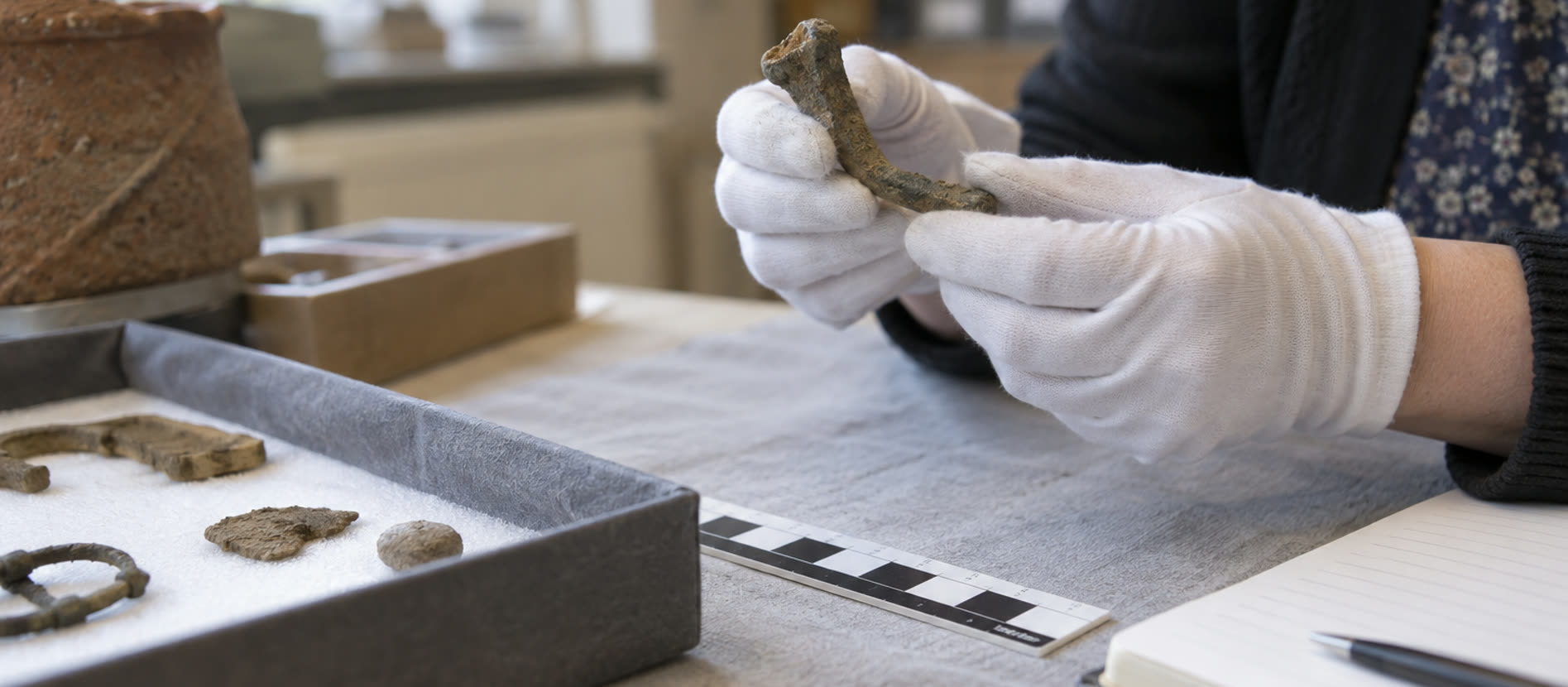
The Portable Antiquities Scheme records archaeological finds made by the public in England and Wales, so information about objects and where they came from can be used for research. The British Museum manages PAS in England; Museum Wales leads the Welsh scheme. A local Finds Liaison Officer (FLO) is the normal person to ask about recording a potential archaeological find.
PAS is not an ownership service, a purchase offer or a blanket appraisal of every modern piece of scrap. Many non-Treasure archaeological finds are recorded voluntarily. Possible Treasure is different: it has a statutory reporting process and a deadline. Do not wait for a PAS appointment before making a legally required report.
What should you record before making contact?
A clear photograph alone is rarely enough. Put the following together while the circumstances are still fresh:
- the precise findspot, plus the field or beach name and the person who gave permission;
- an individual field number linked to the object and every photograph;
- approximate depth and visible layer, without inventing false precision;
- dimensions, visible material, condition and any nearby objects;
- whether the find was isolated, part of a concentration or associated with a feature.
Our record-a-find guide turns those points into a field workflow. If objects appear to form a group, follow the grouped-finds stop rule before extracting more. The archaeological value often lies in the pattern, not just the prettiest object.
How to contact an FLO
Use the PAS contacts directory for England or PAS Cymru for Wales. Send an outline, a location description and photographs, then follow the local instructions for an appointment or transfer. The British Museum explicitly asks people not to post archaeological finds to it without prior arrangement.
An FLO may identify the object, decide whether it is suitable for PAS recording, request more findspot detail or advise on conservation. They may also direct you to the Treasure process. An online identification from a stranger does not replace that assessment. The FLO guide explains what to expect from first contact.
For normal field transit, keep each object and its number physically associated but protected from rubbing. A pouch carries a rigid labelled container; it should not be the only protection for a fragile coin, wet iron or a potentially associated group. Coin storage and iron storage need different decisions once home.
What happens after recording?
PAS records can include an object description, identification and location at an appropriate precision. Sensitive exact findspot information should be handled through the scheme rather than broadcast publicly. Keep your own copy of the field note, photos, PAS reference and any custody receipt. If the object is returned, preserve the original field number on your storage label.
For finds from Scotland, use the Treasure Trove route; for Northern Ireland, see the specific archaeological-object and Treasure rules. PAS is not the substitute for either. Wreck material from tidal water or the seashore has a Receiver of Wreck reporting route as well.
Common questions
Frequently asked questions
Is recording with PAS compulsory for every find?
Many non-Treasure archaeological finds are recorded voluntarily in England and Wales. Possible Treasure has a separate legal reporting requirement and deadline.
Who do I contact about an archaeological find?
Find the local Finds Liaison Officer through the PAS contacts directory in England or contact PAS Cymru in Wales. Send photographs and location information as instructed.
Can I mail a find to the British Museum?
Do not send an archaeological find uninvited. The British Museum asks finders to arrange the process with the relevant scheme or FLO first.
Does PAS cover Scottish finds?
No. Scotland uses the Treasure Trove route; Northern Ireland has its own archaeological-object reporting rules. Use the system for the place of discovery.
Helpful products
Carry labelled finds to a safe place
Use a separate labelled rigid container for each fragile find; a zipped field pouch can hold those containers during normal travel, not replace proper storage.

Compact branded pouch
Minelab Finds Pouch
Best for: Detectorists who prefer a small, uncomplicated pouch and already carry a separate finds box for delicate objects.
- Hip-mounted finds storage
- Lightweight shell construction
- Compact field format
A compact waist pouch intended to keep ordinary finds and small tools at the hip, with a lightweight format that is easy to add to a basic field kit.
Know before buying: The shell pouch is not a substitute for individual bags, labels or a rigid box when precise findspots and fragile surfaces need protecting.