
FINDS CARE · COINS
How to store metal detecting coins
Store metal detecting coins safely after recording: separate each object, retain findspot labels, avoid harmful cleaning and watch for unstable surfaces.
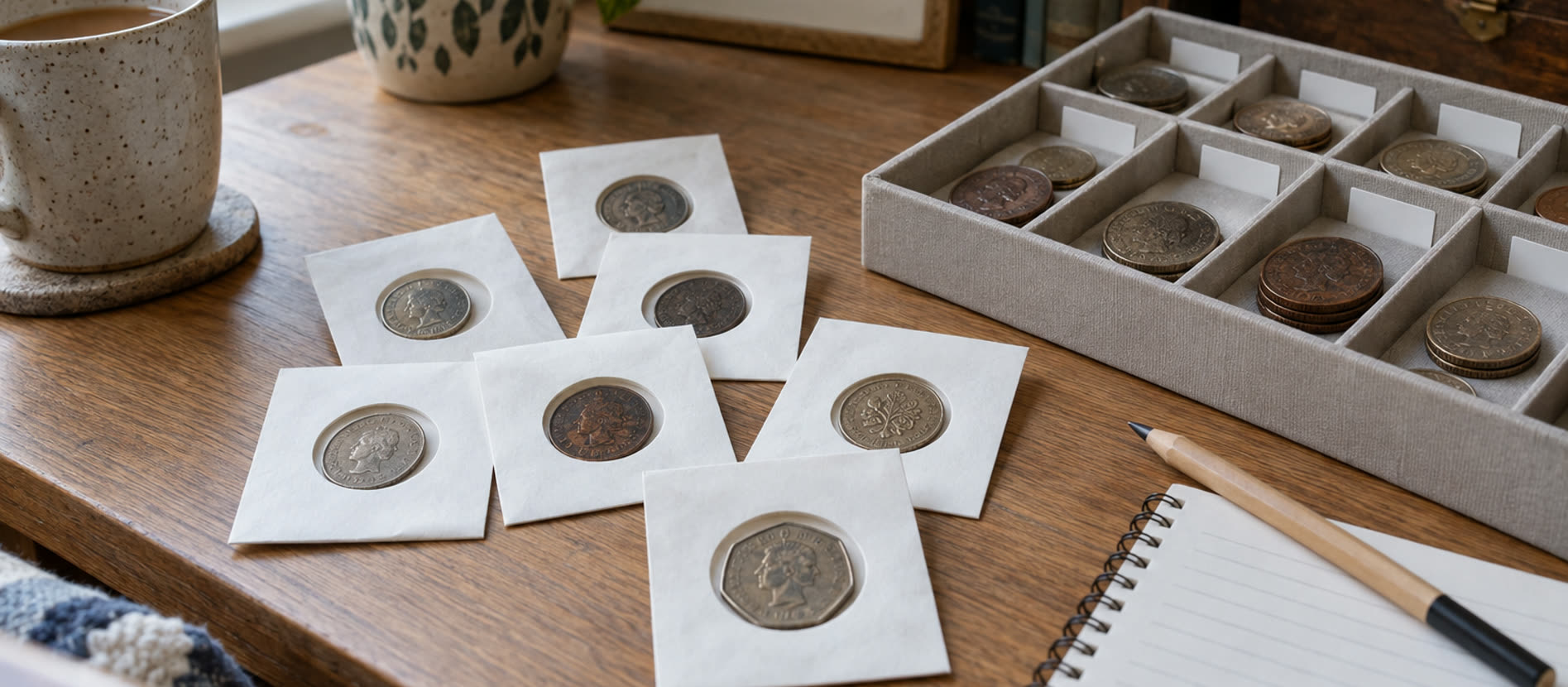
Record the findspot and condition before changing anything.
Avoid loose piles, sticky tape, PVC sleeves and abrasive cleaning.
Seek an FLO or conservator's advice for unstable or important material.
Before storage, preserve the record
Write the find number, precise location, depth, date, permission and any nearby finds into a durable log. Photograph both sides with a scale while the coin is still in its found condition. For an unfamiliar or possibly old coin, see first steps for an old coin and the broader record-a-find guide. A separated coin without its location can be much less useful than an uncleaned coin with a reliable record.
If several coins appear together, do not sort them into a collector's stack. The relationship may change reporting obligations and archaeological interpretation. Stop, record the group and seek advice as described in grouped finds.
A practical storage sequence
- Keep each coin separate. Do not let coins rub against one another or against sharp scrap in a field pouch.
- Use a stable individual holder. An inert, non-PVC coin envelope, acid-free paper packet or suitable compartment with a protective liner is preferable to soft plastic of unknown composition. Fragile or flaking coins may need a rigid, cushioned box and specialist advice instead.
- Label the holder, not the coin. Write a unique field number and link it to the full location and photo record. Never put ink, adhesive or tape on the metal.
- Choose a steady indoor environment. Keep holders away from condensation, bathroom humidity, direct sun and heat sources. Avoid frequent temperature and humidity swings.
- Inspect without repeated handling. If powdering, flaking, active corrosion or new deposits appear, isolate the coin and ask a conservator or FLO before cleaning or coating it.
Historic England's archaeological conservation guidance emphasises specialist assessment of unstable material. Coin metal and corrosion vary: the same home treatment is not safe for every copper alloy, silver, plated or composite coin.
The XP pouch has a separate zipped pocket useful for carrying small labelled containers during a permitted session. At home, move coins to their individual storage holders. Do not use the open debris compartment for loose coins; soil, moisture and other metal can abrade surfaces.
Should a found coin be washed first?
Not by default. Water, rubbing, olive oil, acids and metal polish can remove surfaces or trap moisture. Our cleaning decision guide explains why an apparently dirty coin may be more stable untouched. Ask the local Finds Liaison Officer before treating an archaeological coin, particularly if it may need recording or Treasure assessment.
Keep the collection intelligible
Maintain a simple index with the field number, photographs, material, location, landowner terms, PAS or Treasure reference and current storage position. Do not write a speculative ID on the physical holder as the only identifier; interpretations change. If an object is loaned for recording, document when and to whom it was handed over. Good storage protects both the metal and the story attached to it.
Common questions
Frequently asked questions
Should I clean a coin before storing it?
Not by default. Cleaning can remove an unstable surface or useful evidence. Record and photograph it first, and seek advice for an archaeological or fragile coin.
Can I keep several found coins in one bag?
Separate coins so they do not rub together and so each retains its own field number. A possible coin group needs its relationship recorded before separation.
Are PVC coin flips suitable for long-term storage?
Avoid unknown soft plastic and choose inert, non-PVC or appropriate archival holders. Fragile coins may need rigid support and specialist advice.
What if a stored coin starts flaking?
Isolate it, photograph the change and ask an FLO or conservator before brushing, coating or changing the environment abruptly.
Helpful products
From field to labelled box
A zipped pouch can carry individually protected ordinary coins home; it is not a long-term archival coin container.

All-round field pouch
XP Finds Pouch
Best for: Regular field and wet-weather searches where quick debris storage and a separate protected pocket matter.
- Open pocket plus zipped pocket
- Washable with water drainage
- Belt, strap or MOLLE mounting
A washable belt pouch with an open debris compartment, a zipped pocket for better finds, drainage and MOLLE attachment points for a pinpointer holster or lanyard.
Know before buying: The open section is for robust scrap, not fragile objects; use a rigid finds box inside the zipped area for coins and delicate artefacts.