
Finds care · CONSERVE 48
Should you clean metal detecting finds?
Decide when not to clean a metal detecting find, what to record first and how material, corrosion, Treasure status and storage change the safest next step.
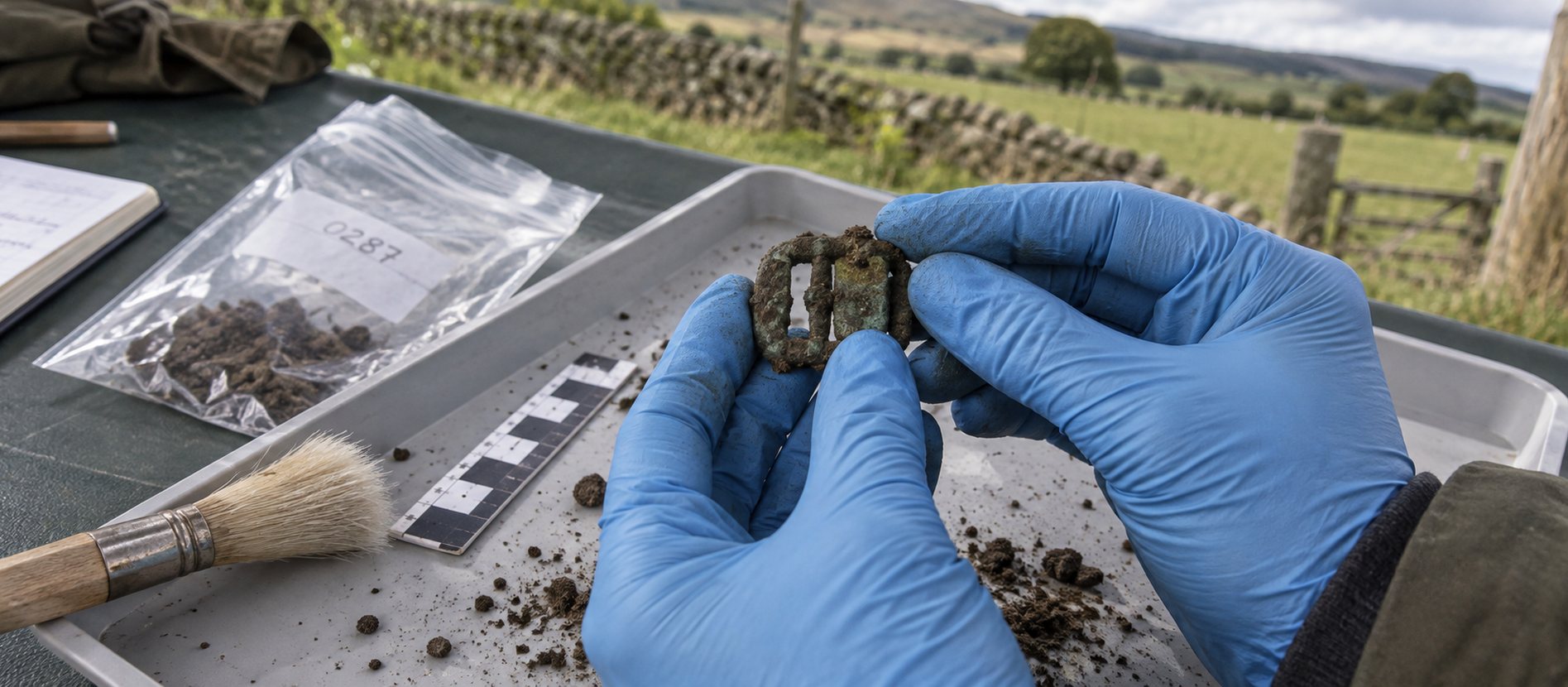
Soil and corrosion can preserve surface detail or archaeological evidence.
Water, acids, polish, electrolysis and wire brushes are not universal solutions.
Treat the object by material and condition, not by a generic online recipe.
The safest default is no cleaning
An unfamiliar find should be recorded, isolated and left alone until you know what it is made from and whether it needs reporting. Cleaning can remove inscriptions, plating, textile traces, mineral-preserved surfaces and soil evidence in seconds. Once removed, that information cannot be put back.
“Clean” and “conserved” are different outcomes. Cleaning aims to remove deposits; conservation aims to understand the object, slow deterioration and retain evidence. A coin that becomes shinier may be less identifiable or less stable than it was in the ground.
Stop before touching these finds
Do not clean an object that may be Treasure, part of a hoard or group, archaeologically significant, unusually fragile, waterlogged, composite or associated with bone or structural material. Photograph it where found if safe, note the precise location and keep attached or nearby fragments together without forcing them into place.
Possible Treasure in England and Wales must follow the official reporting process. Other archaeological finds can be offered for recording through the Portable Antiquities Scheme and a local Finds Liaison Officer. Scotland and Northern Ireland use different systems, so follow the law where the object was found.
If several objects appear together or the target continues into a compact feature, stop further disturbance. The arrangement may matter more than the individual object.
Record before any intervention
Take photographs of both sides with a scale, note the grid reference, field or beach area, depth, ground condition and associated targets. Assign a simple find number and write it on the bag or label, not on the object. Use pencil on archival-style labels where damp ink could run.
The full record-a-find workflow explains what to capture. Cleaning first can make the later record look clearer while quietly removing the evidence that an identifier needed.
Why water is not automatically gentle
Tap water can contain dissolved salts and may enter cracks or porous corrosion. Soaking can soften stable-looking surfaces, move chlorides through an object or separate components. Salt-contaminated beach finds can need specialist desalination, but a casual bowl of water is not a controlled conservation treatment.
Do not wash everything at the sink. If a modern, robust object is certainly non-archaeological and cleaning is only for ordinary use, follow material-specific guidance. For an old or uncertain find, ask first.
A material-by-material triage
Material identification itself may be uncertain, so treat this as a stop/go screen rather than a cleaning recipe.
Copper alloy and bronze
Green or brown patina may be the surviving archaeological surface. Scraping back to bright metal can erase decoration and expose unstable metal. Powdery bright-green activity may indicate continuing corrosion; keep the object dry, isolate it and seek conservation advice rather than applying oil, wax or household chemicals.
Silver
Dark tarnish does not necessarily need removal. Thin hammered coins can be brittle, crystallised or cracked, and polish removes metal from high points first. Do not bend a folded coin or rub it between fingers to reveal a portrait.
Iron
Iron can look solid while corrosion encloses very little remaining metal. Drying, soaking or knocking off a lump may trigger cracking and flaking. Keep detached pieces, avoid electrolysis at home and ask a conservator about important objects.
Lead, pewter and tin-rich alloys
These can be soft, easily scratched and difficult to distinguish. White, grey or powdery surfaces may be significant. Avoid acids, abrasive paste and hard brushes. Support the object so it cannot bend in the container.
Gold
Gold itself is chemically stable, but a gold-coloured object may be plated, low-carat, composite or carry attached material. Possible Treasure status and archaeological context still apply. Stability is not permission to polish.
Organic or composite material
Wood, leather, textile, enamel, glass and attached mineral material can react very differently from the metal. Do not separate layers, allow a waterlogged object to dry rapidly or wrap damp material in an airtight bag without specialist instructions.
Methods to avoid
Do not use a wire brush, rotary tool, metal pick, rock tumbler, acid, vinegar, lemon juice, cola, baking-soda paste or silver dip on an archaeological or uncertain find. Avoid electrolysis unless a qualified conservator has assessed the object and controls the process. These methods can make online “before and after” photographs dramatic because they remove material aggressively.
Ultrasonic cleaners and proprietary solutions are not material-neutral. A label saying jewellery cleaner does not make a product safe for ancient, plated, porous or composite objects.
Is dry brushing ever acceptable?
Only after the object is known to be robust, common, non-reportable and free from fragile surfaces. Use a very soft brush, support the object over a tray and stop if any coloured surface, flakes or powder move. The aim is loose surface soil, not bare metal.
For a modern decimal coin or recent brass fitting with no archaeological interest, ordinary cleaning may be reasonable after ownership is settled. Keep that decision separate from older or unidentified finds.
Storage is an active part of finds care
Place each potentially important object in its own rigid box or supported bag with its label. Do not mix it with sharp iron, lead waste or damp beach rubbish. Keep it away from large swings in heat and humidity while waiting for advice, and do not apply oil, lacquer or wax merely to make it look finished.
A finds pouch should carry smaller protective containers rather than replace them.
Check stored finds periodically without unwrapping fragile surfaces repeatedly. New powder, droplets, cracking, flaking or staining on the container is a reason to isolate the object and seek advice.
Who to ask
A Finds Liaison Officer can advise on recording and the next reporting step for archaeological objects in England and Wales. A museum conservator or accredited independent conservator is the right person for treatment advice, especially where the material is unstable or the object has financial, family or research value.
Send clear photographs, dimensions, findspot details and an honest description of anything already done. Do not clean an object to make the enquiry look better. Its current condition is part of the information the adviser needs.
Common questions
Frequently asked questions
Should I wash a metal detecting find in water?
Not until the material and condition are understood. Water can enter cracks, move salts and loosen fragile surfaces. Record an old or uncertain object first and ask an FLO or conservator before washing it.
Can I clean an old coin with vinegar or lemon juice?
Do not use household acids on an archaeological or uncertain coin. They remove corrosion and metal without distinguishing detail from damage and can leave the surface less stable.
Is a soft dry brush safe for finds?
Only for a known robust, common and non-reportable object after its condition has been assessed. Support it over a tray and stop immediately if colour, powder or flakes move.
Who can advise me about cleaning an archaeological find?
A Finds Liaison Officer can advise on identification, recording and reporting in England and Wales. A museum or accredited conservator is the appropriate source for treatment of fragile, unstable or valuable material.
Helpful products
Field storage before any cleaning decision
A pouch is useful only when delicate finds are isolated in labelled containers rather than mixed with sharp scrap. These products are storage aids, not cleaning tools.

All-round field pouch
XP Finds Pouch
Best for: Regular field and wet-weather searches where quick debris storage and a separate protected pocket matter.
- Open pocket plus zipped pocket
- Washable with water drainage
- Belt, strap or MOLLE mounting
A washable belt pouch with an open debris compartment, a zipped pocket for better finds, drainage and MOLLE attachment points for a pinpointer holster or lanyard.
Know before buying: The open section is for robust scrap, not fragile objects; use a rigid finds box inside the zipped area for coins and delicate artefacts.

Compact branded pouch
Minelab Finds Pouch
Best for: Detectorists who prefer a small, uncomplicated pouch and already carry a separate finds box for delicate objects.
- Hip-mounted finds storage
- Lightweight shell construction
- Compact field format
A compact waist pouch intended to keep ordinary finds and small tools at the hip, with a lightweight format that is easy to add to a basic field kit.
Know before buying: The shell pouch is not a substitute for individual bags, labels or a rigid box when precise findspots and fragile surfaces need protecting.