
PLACES · GROUND CONDITIONS
Metal detecting after rain
Decide when to metal detect after rain in the UK, how moisture changes signals and turf recovery, and when wet fields or river edges should be left alone.
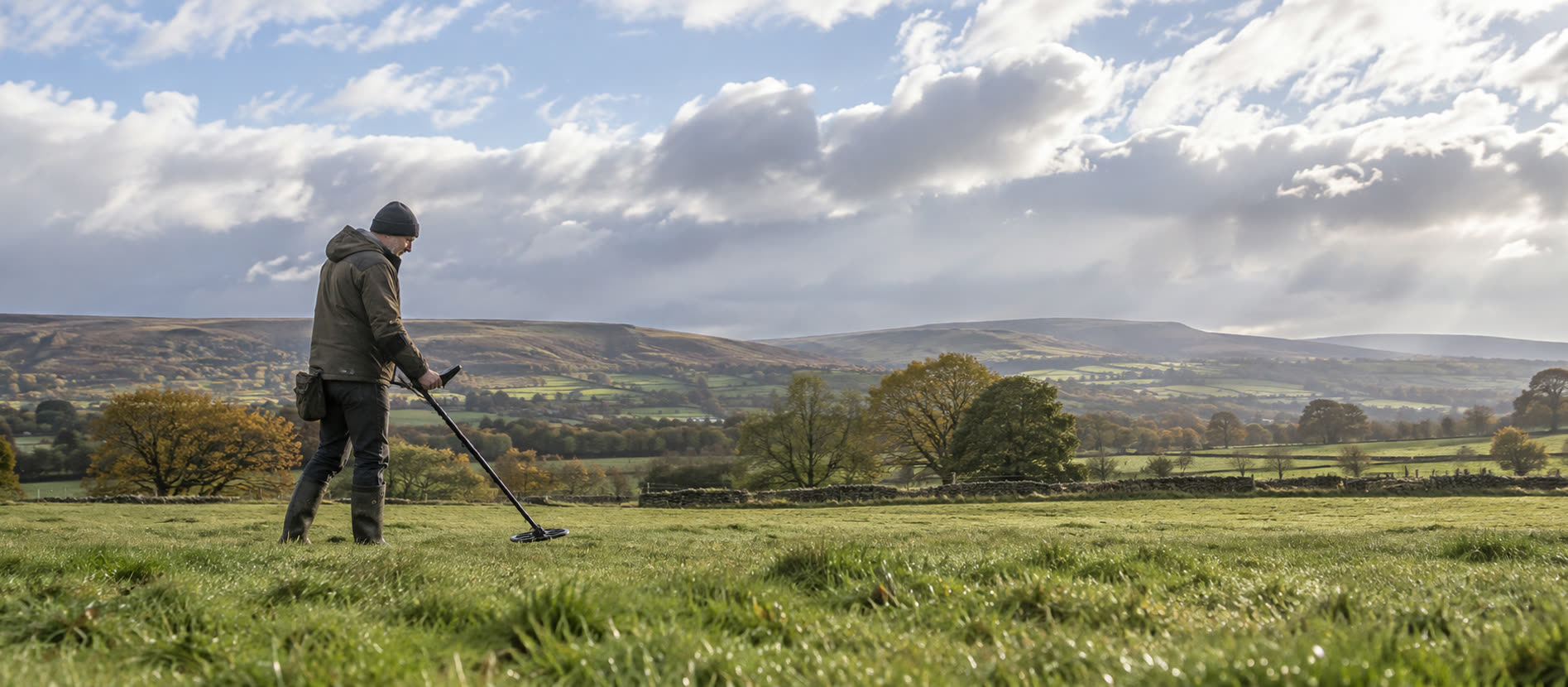
Check the landholder's access window and avoid machinery or livestock disruption.
Start with a stable profile and adjust one control at a time.
Stop recovery before wet turf tears or soil is carried off the field.
Does metal detecting improve after rain?
Sometimes a previously marginal target sounds different in moist soil, but the effect depends on soil composition, mineralisation, target and detector settings. Wet conditions may also increase ground response or electrical instability. Do not treat rain as a universal depth multiplier. Compare one repeatable target before and after changing a setting on the same ground, keeping coil height and sweep speed consistent. The weather and soil-moisture guide explains the larger pattern; air tests versus ground explains why bench distances cannot settle it.
The practical first question is not signal strength but whether the surface can be restored. A firm damp pasture after a shower can be pleasant to work. Saturated turf, waterlogged hollows and recently seeded fields are different. Ask the farmer whether the field is open, especially during silage, spraying and livestock movement.
Assess the ground before switching on
Walk the access route and press a boot into an unimportant area. If the ground ruts, sticks heavily or moves underfoot, postpone. Do not test recovery by cutting a plug in a sensitive place. On a suitable area where shallow digging is allowed, stop after the first recovery if the plug crumbles or leaves an obvious scar. The pasture guide gives a field-specific reinstatement sequence.
Keep away from steep banks and streams after heavy rain. Water can rise from rainfall upstream even if your own sky is clear. Check flood warnings and river levels before any waterside trip; the riverbank guide addresses the extra permissions and safety issues.
Retune to the wet ground
Begin in the manufacturer's usual field profile, run noise cancel if provided and ground balance as the manual instructs. Listen for a stable threshold or quiet background before raising sensitivity. If every clod or coil bump produces a response, lower gain rather than assuming the field is full of deep finds. Wet vegetation can move the cable and touch the coil, so secure connections and check the cable loop.
Sweep slowly at a repeatable height. A level coil and overlap usually give a larger practical improvement than chasing one extra sensitivity notch. Check an uncertain signal from two directions and consider target-ID limitations in wet or iron-rich soil. Write down the ground condition with any unusual find; the context matters later.
Keep recovery compact and clean
On permitted, firm ground, pinpoint first, lift the smallest stable plug and put loose soil on a cloth rather than smearing it through grass. A handheld pinpointer can reduce unnecessary widening of a permitted hole; keep its speaker and seals clean afterwards. If water appears or the plug will not close flush, stop digging and choose another day.
Do not wash an old coin in field puddles. Photograph it and keep it separately labelled until you can follow finds-care first steps. At the end, remove safe sharp litter, restore the site as agreed and clean mud from footwear and equipment before moving between farms. If severe rain returns, leave before routes become impassable.
Common questions
Frequently asked questions
Do metal detectors find deeper after rain?
Moisture can change ground and target response, but there is no universal depth gain. Test a repeatable signal on the actual site and keep settings stable.
Is wet pasture easier to dig?
Firm damp soil may form a tidy plug, but saturated turf can smear, collapse or compact. Stop if a permitted recovery cannot be restored cleanly.
Should I turn sensitivity up after rain?
Not as a rule. Start with a stable baseline and change one setting only if ground noise or a repeatable target gives a reason.
Can I go to a riverbank after local rain stops?
Rain upstream can still raise the water. Check current warnings and levels, then assess the actual bank and exit; postpone if either is unsafe.
Helpful products
A locating aid for suitable damp ground
A waterproof-rated pinpointer can help inspect a tidy plug where recovery is permitted. It does not make saturated soil fit to dig.

Premium pinpointer
Garrett PRO-Pointer AT
Best for: Regular inland, beach and shallow-water detecting where simple controls and a robust waterproof body matter.
- 11.5 kHz
- Whole pinpointer to 6 m (IP68)
- 200 g with battery
A highly visible waterproof probe with three sensitivity levels, proportional audio and vibration, fast retune and a 360-degree detection area.
Know before buying: One button handles power, retune, sensitivity and silent mode, so the control sequence takes a little practice. It uses a replaceable 9V battery.