
STARTING OUT · SOLO FIELDCRAFT
Metal detecting alone safely in the UK
A practical solo metal detecting plan for UK fields and beaches: permission, check-in times, weather, hazards, emergency details and a sensible kit.
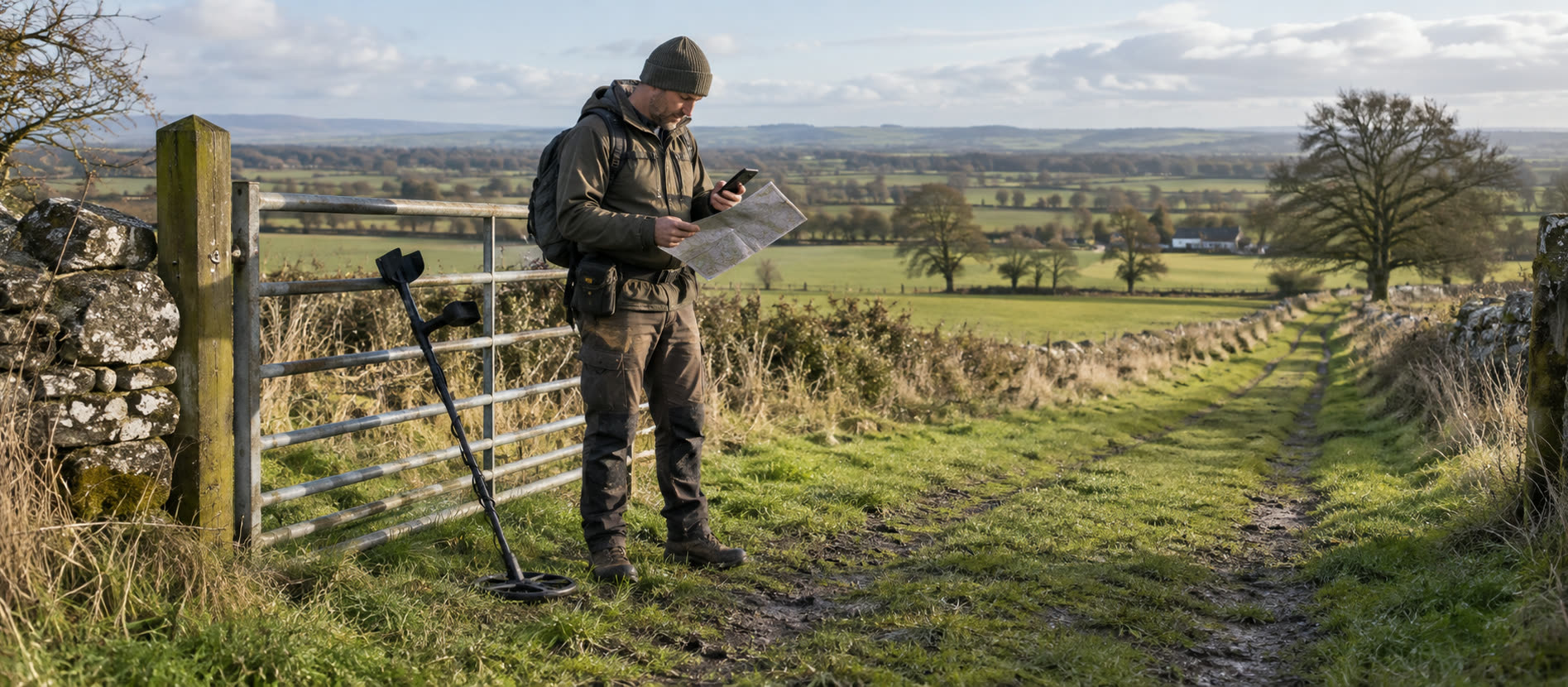
Share a location and check-in time with a named person.
Carry only the kit you can use safely on that ground.
Stop for uncertain hazards; a target is never worth handling blindly.
Give someone a useful check-in plan
“I am going detecting” is not enough information if you fail to return. Share the permission name or beach access point, the fields you intend to search, where you parked, your expected finish time and when the person should call you. Agree what they should do if you miss that check-in. A live location can help, but it is not a substitute for a written location when the battery or signal fails. South Downs National Park Authority specifically advises solo detectorists to make sure someone knows where they are.
Keep the session modest if you are unfamiliar with the land. Ask the occupier about livestock, machinery, ditches, soft ground and gates. The written permission guide helps define where you may search; a public footpath or access right does not itself give detecting permission. Mark excluded ground on an offline map before you start.
Choose conditions you can get out of
Check the forecast, daylight and the route back. A field with deep ruts can become slippery after rain; a beach exit can be cut off by a rising tide. For a beach session, consult tide times and local restrictions, stay within a known exit route and leave the wet edge well before conditions become difficult. Our beach detecting guide covers the separate permission and ground questions.
If the weather closes in, stop detecting and walk out while you can still see the route. Do not use the detector as a reason to cross a ditch, climb an unsafe fence or search near active farm machinery. Follow the Countryside Code: leave gates as found, give livestock space and do not obstruct access.
Pack for an ordinary problem, not a heroic rescue
Carry a charged phone, offline map or grid reference, water, weather layer, basic first-aid supplies and any medication you personally need. A whistle and power bank are small extras worth considering on a remote permission. Keep the phone out of the rubbish pocket and protect it from rain. If your detector uses replaceable batteries, carry spares; if it charges, start full. The first-day equipment checklist gives a fuller kit by ground type.
Wear gloves for recovery, use a suitable tool agreed with the landholder and keep your back and knees in mind. A pinpointer can shorten the time spent kneeling over a hole, but it is not safety equipment. A pouch helps separate ordinary finds, rubbish and sharp pieces; do not put a suspicious object into it.
Treat unusual finds as a stop signal
Do not touch, move, clean or carry suspected ammunition or ordnance. Withdraw, keep others away and contact police using the appropriate emergency route; our dangerous finds guide explains the priority. If you expose human remains or a concentrated archaeological group, stop digging and seek the correct advice rather than opening the hole further. Record an ordinary safe find's position before moving it; see how to record a find.
Do a final walk back along your route while light remains. Check that holes are restored, rubbish is removed and gates are as agreed. Message your check-in contact when you are safely off the land. If you cannot reach them, try another method before their agreed escalation time. The best solo habit is an uneventful finish that someone else knows about.
Common questions
Frequently asked questions
Should I tell someone exactly where I am detecting alone?
Yes. Give a named contact the permitted area, access point, parking place, expected return and a missed-check-in plan. A live location may fail without battery or signal.
What should I carry for a solo field session?
Take a charged phone, location or offline map, water, weather layer and the essentials you personally need. Keep the kit light enough to leave the ground safely.
Can I detect alone on any accessible beach?
No. Check the exact beach's detecting and digging rules, protected areas, tides and exit route before starting.
What if I uncover possible ammunition while alone?
Do not touch, move or take it home. Withdraw, keep others clear and contact police or emergency services as appropriate.
Helpful products
Keep hands and pockets clear
A field pouch can separate ordinary finds from sharp scrap while keeping a phone and emergency essentials accessible elsewhere.

Compact branded pouch
Minelab Finds Pouch
Best for: Detectorists who prefer a small, uncomplicated pouch and already carry a separate finds box for delicate objects.
- Hip-mounted finds storage
- Lightweight shell construction
- Compact field format
A compact waist pouch intended to keep ordinary finds and small tools at the hip, with a lightweight format that is easy to add to a basic field kit.
Know before buying: The shell pouch is not a substitute for individual bags, labels or a rigid box when precise findspots and fragile surfaces need protecting.