
PLACES · TIDAL GROUND
Tide planning for beach metal detecting
Plan a UK beach metal detecting session around official tide predictions, safe exits, beach permissions, wet-sand conditions and changing coastal weather.
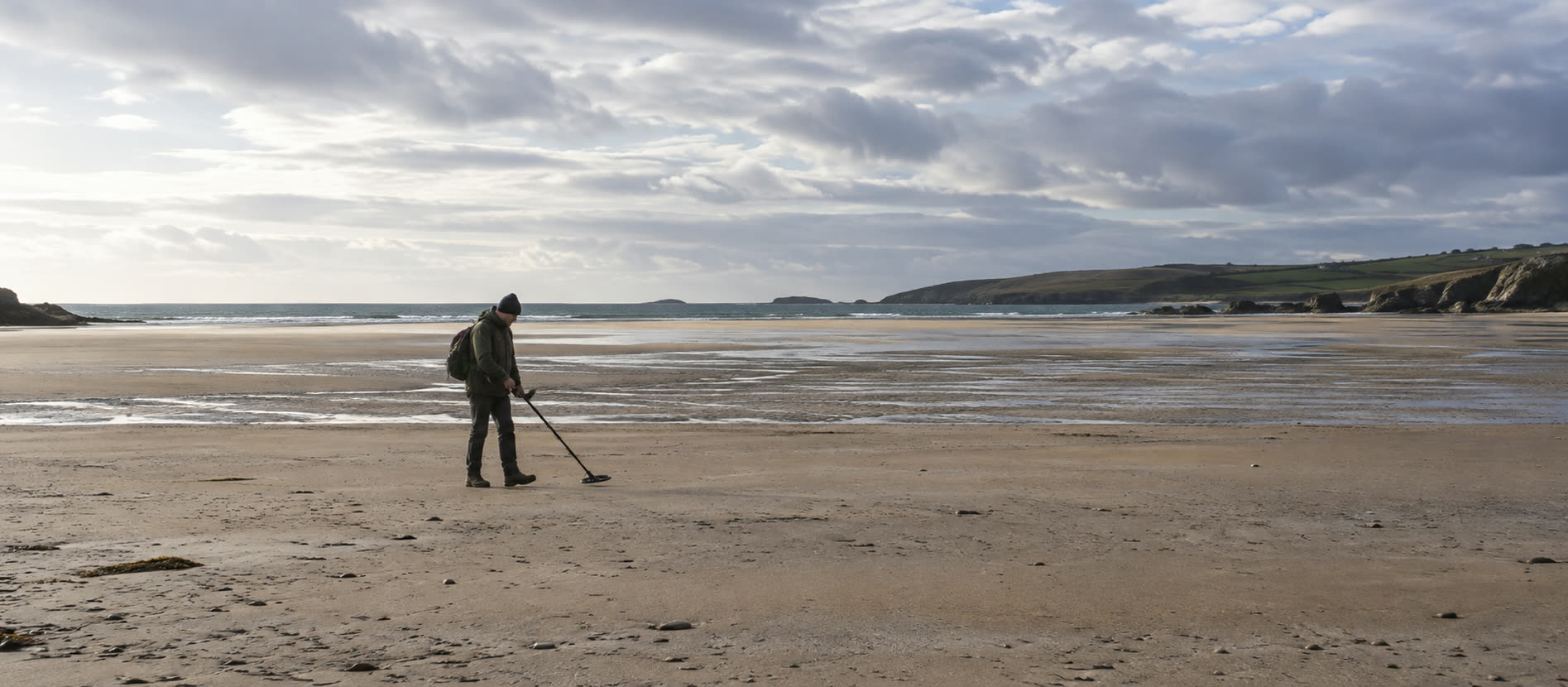
Check an official/local tide source and identify where the retreating route stays open.
Never assume a familiar beach has identical channels or sand levels today.
Keep permitted recovery shallow and avoid dunes, protected habitat and wreck material.
Start with the beach's rules, not the tide chart
All foreshore has an owner or manager, and open public access is not a blanket right to detect or dig. The Crown Estate's role varies by coastline and does not override local restrictions, protected habitats, archaeology, ports or private ownership. Read our Crown Estate beaches guide and check the actual location before packing a spade. The general beach guide covers permission and finds handling in more detail.
Some estuaries and special foreshore areas have separate permits. Do not transfer an ordinary seaside rule to a river mouth or tidal Thames. Photograph signs and keep any written permission or map of exclusions. Recovery near dunes, nesting areas, sea defences or a known wreck may be forbidden even where the open sand is accessible.
Read tide predictions as a route plan
Check the Met Office beach forecast and tide guide or a local harbour authority before travel. Note both the low and next high water, but also the shape of the beach, channels, headlands and whether the exit crosses lower sand. The Met Office warns that a cove or route can be cut off and that the tide may advance fastest around the middle of its rise. Wind, pressure and swell can change what you see from a simple table.
The RNLI advises checking weather and tide times before a coastal visit. Do not search with headphones so isolating that you miss surf, people or warning signals. Begin near a safe upper route, search in a way that moves towards your exit, and set a conservative turnaround time well before high tide. If you cannot identify a safe way back at every stage, leave the lower beach.
Match the search line to the sand
Dry upper sand and conductive wet salt sand challenge detectors differently. A machine may be quiet on dry sand and unstable where salt water saturates it. Begin with the maker's Beach programme, noise cancel if available and lower sensitivity until a repeatable signal stands clear of the background. Check the wet versus dry sand guide before treating one setting as universal.
A simultaneous multi-frequency detector such as the VANQUISH 360 is a sensible mixed-sand shortlist candidate; its published Beach mode and whole-detector water rating are useful features. Neither makes waves, channels or changing tide safe. Check connectors and the manual's submersion instructions, and keep your attention on the shore. The wet-sand detector comparison explains alternative approaches.
Recover and record without losing the exit
Where recovery is allowed, refill each hole and check it from walking height. Sharp cans, fishing hooks and possible munitions should not be pocketed casually; follow dangerous-finds guidance. A potentially old object needs a precise private findspot because tidal movement can quickly erase its context. Wreck material has its own reporting duties; the reporting guide points to the appropriate official route.
Rinse equipment as the manufacturer directs after salt exposure, dry connectors and charge only when clean and dry. More importantly, leave while the shore is still plainly safe. A good tide session ends before the water changes your plan.
Common questions
Frequently asked questions
When is the best tide for beach metal detecting?
There is no single safe time for every beach. Check the local tide prediction, weather, channels, exits and the permitted area, and leave with a generous margin.
Does low tide mean the whole beach is safe?
No. A cove, channel or headland can cut off a return route before the beach looks covered. Keep a visible safe exit throughout.
Can I detect any beach owned by the Crown Estate?
No. Check the actual ownership, Crown Estate terms, local byelaws, protected areas and any port or archaeological restrictions for the exact beach.
Is a waterproof detector enough for wet sand?
No. Salt response and water safety are separate from the equipment's submersion rating. Use a suitable beach setting and never follow a signal into unsafe water.
Helpful products
One mixed-sand detector option
The VANQUISH 360's automatic Multi-IQ and Beach mode make it relevant to mixed dry and wet sand, but check the beach's rules and the maker's water instructions first.

Mid-range
Minelab VANQUISH 360
Best for: Parks, fields and beaches for a beginner who wants simple controls and one detector for varied ground.
- Multi-IQ simultaneous multi-frequency
- Whole detector to 5 m (IP68)
- 1.16 kg
Automatic simultaneous multi-frequency operation, a low 1.16 kg weight and full 5 m waterproofing make this the least complicated route into mixed UK ground.
Know before buying: The deliberately simple control set offers less room to tune audio and recovery behaviour than the X-TERRA PRO.