
Ground · MINERAL RESPONSE
Metal detecting in mineralised soil
Recognise mineralised-ground chatter, choose a stable mode, ground balance correctly and adjust sensitivity without confusing soil with a real target.
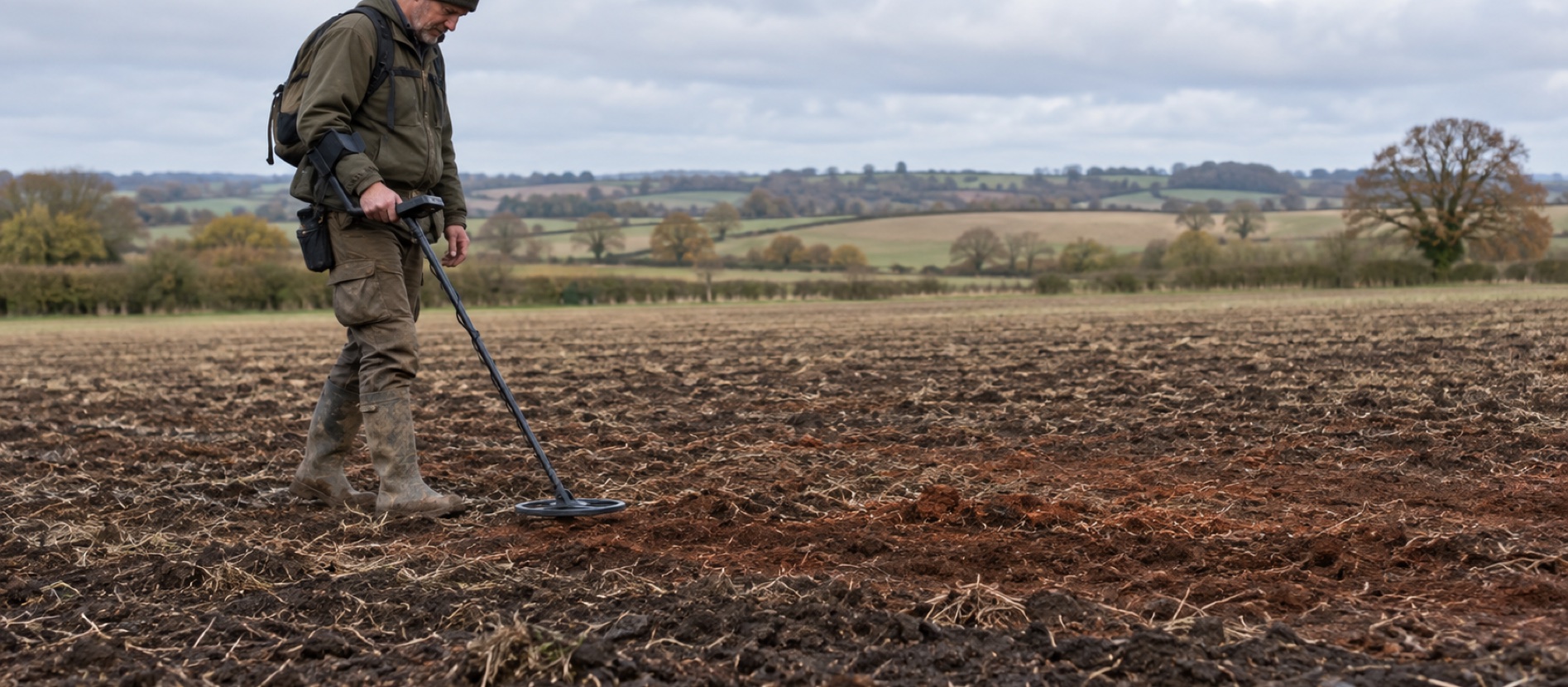
Ground response is often broad or tied to coil movement rather than one compact point.
Wet salt sand and inland iron-rich soil require different mode choices.
A stable, repeatable signal is more useful than a high sensitivity number.
What mineralised soil does to a detector
Soil is not electrically invisible. Fine iron minerals and dissolved salts can respond to a detector's transmitted field. Because there is far more soil under the coil than metal in a small buried coin, that broad background may overwhelm a weak target response. Minelab's detecting concepts guide identifies mineralisation as one of the factors that can reduce detection depth and mask small objects.
Inland mineralisation is not a single UK soil type. An iron-rich red patch, imported made ground, black magnetic stones and saline coastal deposits can behave differently. A field that is calm at one end may become noisy near a wet hollow or former track. Treat the detector's behaviour and a controlled test as more useful than judging mineral content from colour alone.
First rule out other causes of chatter
Before changing ground balance, move away from overhead lines, electric fencing, buried services, vehicles and other detectorists. Secure a loose coil cable and remove metal spade or boot fittings from the coil's path. Run the manufacturer's noise-cancel procedure if available. An intermittent high chirp that follows a cable knock is not fixed by balancing soil.
Next, hold the coil still above a clean-looking patch. If the chatter stops while stationary but appears when you lower, raise or sweep the coil, ground response becomes more plausible. If it continues while stationary, electrical interference or a hardware problem deserves attention. The false-signal guide walks through these checks.
Use the correct mode, then balance over clean ground
Select a Field or other manufacturer-recommended inland mode. Find a patch free of obvious metal by scanning from several directions. Follow the exact manual's balance sequence; do not copy the pumping height or button combination from another brand. Automatic balance is a useful starting point. Manual balance can help when a model permits a small correction; tracking can follow gradual changes but should be used with awareness around weak targets.
The ground-balance explanation separates those modes from sensitivity and frequency. Do not assume a number that worked yesterday remains correct on a different field. Retest after moving from pale dry ground into a dark damp patch or from mineral soil into ordinary pasture.
The X-TERRA PRO lists automatic, manual and tracking balance in its manual. That flexibility suits an operator willing to verify changes against a known target. It is a selectable single-frequency detector, not simultaneous multi-frequency; its broader controls should not be described as automatic superiority on every mineralised site.
Set sensitivity for a readable sound
Raise sensitivity gradually until the detector begins to produce random ground responses, then return to the last calm setting. A slightly quieter machine can reveal a faint repeatable target that maximum gain would bury in chatter. If the detector becomes noisy only when the coil brushes a clod or stone, check sweep height and physical impact before lowering the setting further.
Do not silence every low number with discrimination. Mineralised ground can pull target IDs around, especially for small or deep objects. Shorten the sweep and check the same compact point from a second direction. If the response is broad across a whole patch or repeats in sync with a line of dark stones, it may be ground rather than a recoverable object. The signal-reading guide helps evaluate that distinction.
When multi-frequency helps—and when it cannot
Simultaneous multi-frequency processing can provide useful information across different target conductivities and ground conditions, but it does not abolish mineral response. The X-TERRA ELITE combines Multi-IQ with adjustable recovery and balance, making it a flexible mixed-ground option. Its larger standard coil can also see more of a noisy patch at once, so coil size and technique remain relevant. Compare multi-frequency and single frequency before paying for a label alone.
Very difficult ground may force a lower sensitivity or a different mode even on an expensive detector. Some specialist pulse-induction systems handle particular mineral conditions differently, but often sacrifice convenient target discrimination or portability. This guide is about getting a general-purpose VLF machine stable, not promising one technology will solve every soil.
Wet salt is a separate case
Salt water connects grains of wet sand and creates a broad conductive response. An inland Field profile may chatter at the tide line even if it was calm on red soil. Use the manufacturer's Beach profile and recheck settings when moving between dry sand, wet sand and shallow wash. Waterproof construction does not itself cancel salt. The wet-sand guide gives appropriate machine choices and setup.
Search and recover responsibly
Keep the coil low and level, overlap each sweep and revisit a compact doubtful signal from another direction. If a patch remains unworkably noisy, note it and return with a different coil or conditions rather than digging every ground response. On farmland, preserve the agreed recovery layer and stop at compact archaeological material. Find recording matters especially when soil changes around a group of objects; the surrounding context may explain the find.
Common questions
Frequently asked questions
How can I tell if mineralised soil is causing false signals?
Ground response often appears as a broad or movement-related sound rather than a compact repeatable point. First rule out electrical interference, a loose cable and metal on your clothing or tools.
What should I change first on mineralised ground?
Select the correct search mode, run noise cancel if available and ground balance over a clean patch as the manual directs. Then lower sensitivity only enough to regain stability.
Is wet beach sand the same as iron-rich inland soil?
No. Connected salt water produces a conductive response; fine iron minerals create a different ground challenge. Use the relevant Beach or inland mode and retest after changing zones.
Will multi-frequency remove all ground noise?
No. It can help in some conditions, but mineralisation, electrical interference and poor coil control can still create noise. Stable setup matters on every detector.
Helpful products
Adjustable ground options
Both X-TERRA models include ground-balance controls; the PRO uses selectable single frequencies while the ELITE adds simultaneous Multi-IQ. Choose the system for your wider sites, not mineralisation alone.

Upper mid-range
Minelab X-TERRA PRO
Best for: A committed inland beginner who wants to learn how frequency, ground balance and audio choices change detector behaviour.
- Selectable 5 / 8 / 10 / 15 kHz
- Whole detector to 5 m (IP68)
- 1.3 kg
Selectable 5, 8, 10 and 15 kHz operation, six search profiles and detailed tone and discrimination controls give a keen beginner more room to progress.
Know before buying: Selectable frequencies are not simultaneous multi-frequency, and the extra controls create a steeper first-week learning curve.

Upper mid-range
Minelab X-TERRA ELITE
Best for: Regular field, park and beach use where stable mixed-ground performance and detailed controls justify a higher budget.
- Multi-IQ; 15 kHz inland option
- Whole detector to 5 m (IP68)
- 1.3 kg
Multi-IQ simultaneous multi-frequency operation, six search profiles and a 5 m waterproof build make this a capable step-up detector for varied UK ground.
Know before buying: Its larger coil and deeper menu demand more concentration than a simple starter model, and wireless audio uses Minelab's compatible low-latency system rather than ordinary Bluetooth.