
DETECTOR FIELD GUIDE · GARRETT
Garrett ACE 300i: UK setup and field guide
Learn the Garrett ACE 300i's first setup, 8 kHz controls, target ID, coil-only waterproof boundary and who it suits on UK permissions.
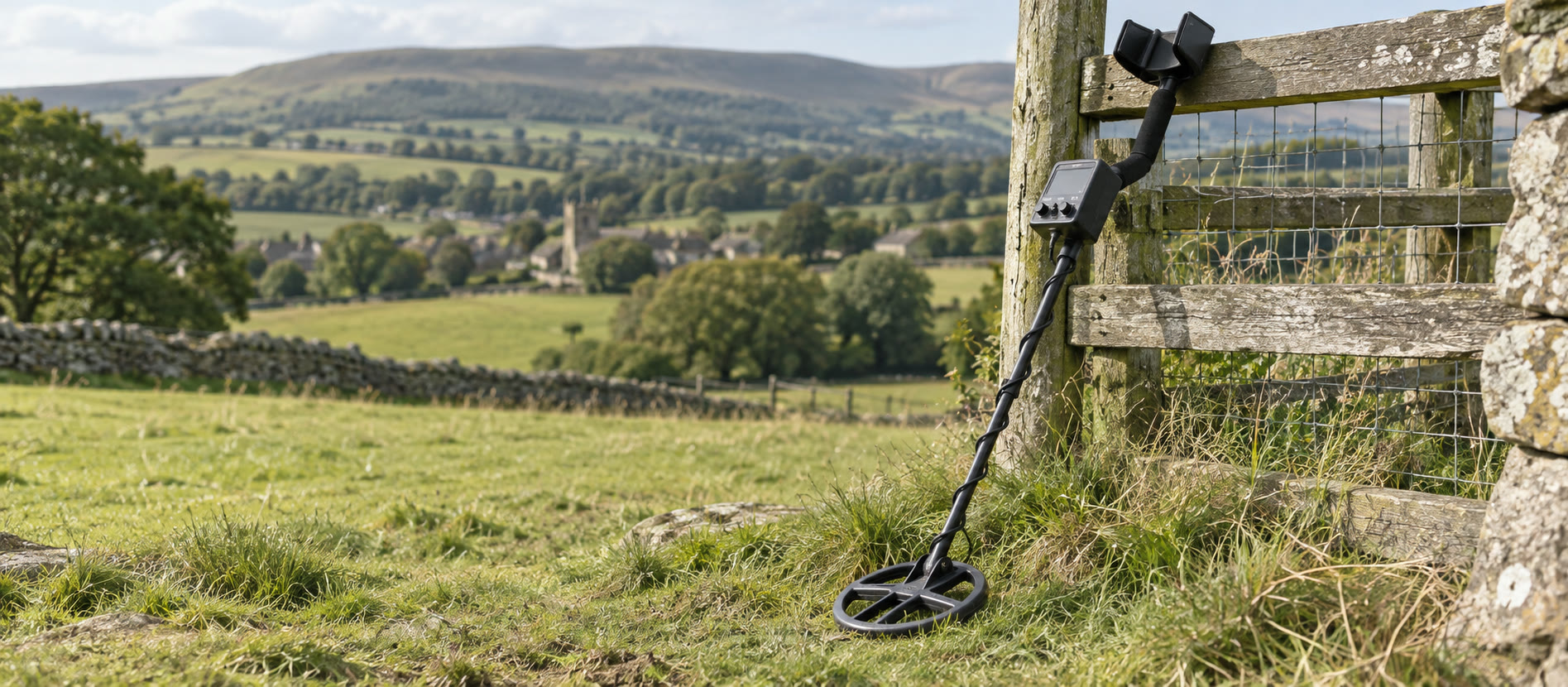
Assemble the coil and cable without strain, then fit the shaft to your height.
Begin with a moderate sensitivity and listen to repeatable signals from two directions.
Check the exact 300i manual before changing batteries or searching near water.
What the ACE 300i is
Garrett's ACE 300i owner's manual describes an 8 kHz detector with five search modes, digital target ID, pinpointing and four AA batteries. The standard 7-by-10-inch concentric searchcoil and 1.27 kg listed weight make it a recognisable entry machine, but neither number predicts comfort in your hand. Test shaft length and balance before choosing it for a long field session.
The “i” model deserves an exact listing check; advice or accessories for a different ACE generation may not transfer. The waterproof searchcoil may encounter shallow water as its manual permits, but the control housing must stay dry. A coil-only rating is not a general beach waterproof claim. For frequent wet salt sand, compare a simultaneous multi-frequency, fully waterproof alternative in our ACE versus VANQUISH 360 guide.
Assemble and start without false signals
Seat the coil hardware by hand, adjust the stem until the coil can move level just above the ground, and wrap the cable securely with a little movement allowance at the coil pivot. Do not pull the connector or trap the cable under a lock. Fit four matching AA cells in the orientation shown by the battery compartment and manual. If the detector is silent, begin with the power checklist rather than dismantling the control unit.
Switch on outdoors away from a car, electric fence, buried cable or other detector. Start in a broad search mode with moderate sensitivity. If the ACE gives constant stray responses, reduce sensitivity, move away from interference and check for a moving coil cable. Do not keep increasing sensitivity to chase theoretical depth; stability matters more. Practise over a coin, a pull-tab and a nail on clean ground, then compare the sound with what the display shows.
Use modes and target ID carefully
Five modes are useful shortcuts for different response patterns, not object-identification promises. A coin and scrap metal can share an ID; soil and nearby iron can alter the reading. Recheck a candidate target from a second direction, narrow the sweep and use pinpoint only after a repeatable search response. The target-ID explainer and first signals guide are better training companions than a chart of supposedly guaranteed finds.
In nail-rich ground, note how often a tone breaks as you rotate around a signal. A high discrimination setting can hide wanted metal close to iron. Recover only where the landholder permits it and where you can replace the ground cleanly. In dry or delicate turf, leaving the target is better than a damaged plug.
Best fit and limitations
The ACE 300i makes sense for a user who mainly detects on permitted inland ground, likes replaceable AA cells and wants a clear, relatively simple machine. It is less persuasive for a routine wet-beach hunter or someone seeking extensive ground and audio control. Before paying for extra coils or headphones, learn the standard setup for several outings and check exact compatibility. If an upgrade is already tempting, identify the real limitation first.
Common questions
Frequently asked questions
What frequency does the ACE 300i use?
Garrett describes it as an 8 kHz single-frequency machine with frequency adjustment, not simultaneous multi-frequency.
Can the ACE 300i control box go underwater?
No. Only the searchcoil is waterproof; keep the control housing dry.
How is the ACE 300i powered?
It uses four AA batteries. Follow its exact manual for fitting and replacement.
Is the ACE 300i suitable for a beginner?
Its modes, target ID and pinpoint control offer a straightforward inland learning path, provided the machine fits and the search site is permitted.