
COMMUNITY · CLUBS
How to choose a metal detecting club in the UK
Assess a UK metal detecting club's permissions, insurance, finds rules, safeguarding and field etiquette before paying dues or attending a dig.
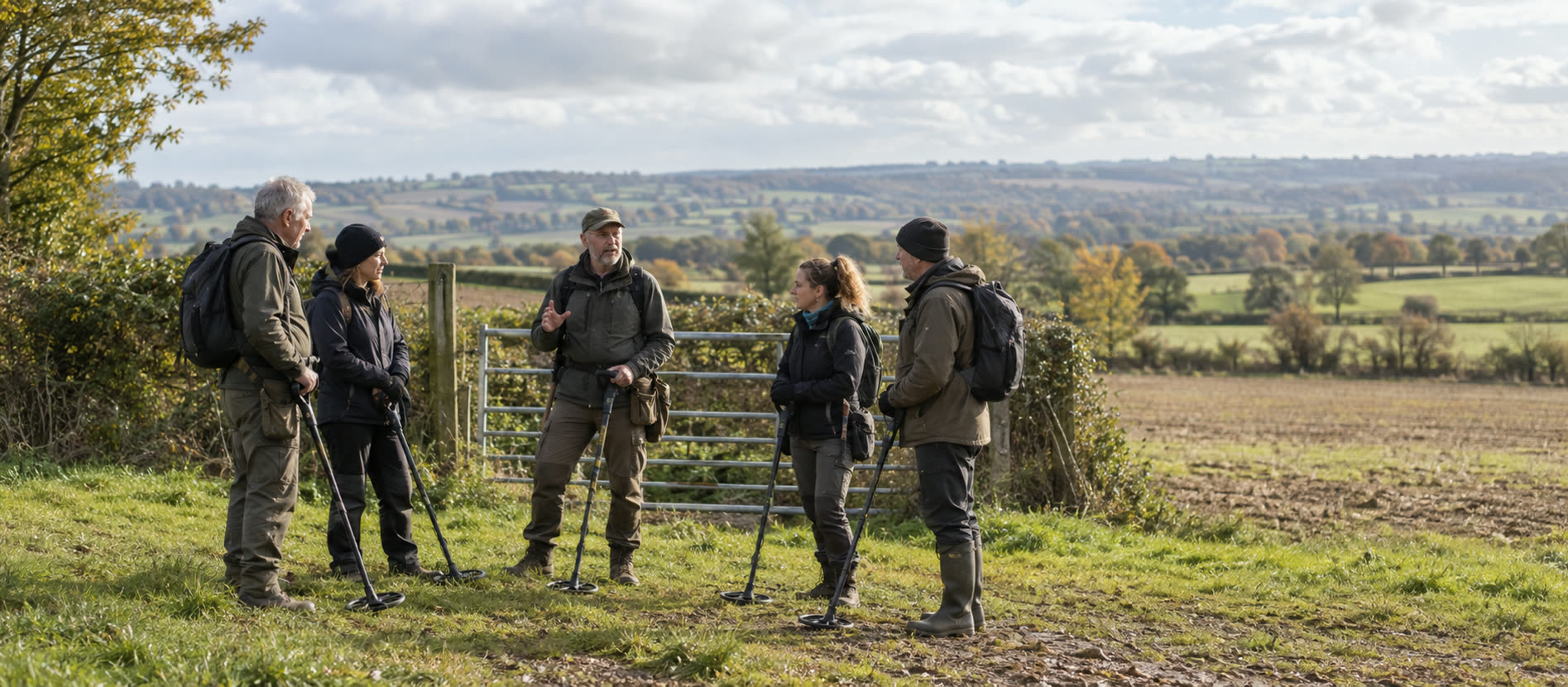
Use a first-event checklist
Ask for the rules in writing, compare them with official guidance, and attend a meeting or low-pressure event before committing to a membership.
A pinpointer is useful on an authorised club dig, but the club's recovery limits come first.
Separate a club from an informal online group
The National Council for Metal Detecting's club and group standards distinguish a club with a committee, constitution and regular meetings from an online group that primarily arranges outings. Either can offer good company; the structure changes how decisions and disputes are handled. Ask who holds the land permission, who marshals the field and who you contact if something goes wrong. A social-media member count is not evidence of safe access.
Our find-a-club guide helps locate options; this page is about assessing them. Check that new members can read the code of conduct and understand the fee, refund policy, event capacity and what happens when an event is cancelled. Seek the actual landholder agreement or a clear account of its scope, not merely an organiser's assertion that the field is “sorted”.
Six questions to ask before paying
Permission and boundary: Which named field is covered, on what dates, and are there no-dig areas, crops, livestock or archaeological exclusions? Insurance: What individual cover is required and what does the organiser's policy actually cover? Finds: Who records coordinates, handles potential Treasure or grouped finds, and contacts the FLO? Ownership: What do the landholder and finder agree about ordinary objects and any reward? Safety: Who is the marshal and what is the plan for suspected ordnance, severe weather or injury? Behaviour: What are the expectations on hole reinstatement, rubbish, photographs and sharing a private findspot?
A club that cannot answer a question immediately may simply need time to retrieve its paperwork. A club that dismisses the question is a different concern. The organised-dig guide has a more detailed event checklist.
Observe the culture, not just the constitution
At a first meeting, notice whether experienced members explain permissions and careful recovery without ridicule. At a field event, watch how they close plugs, respect crop lines and respond to a possible significant find. Ask whether beginners can pair with a mentor. Do not assume that the loudest detectorist or the person with the most expensive machine sets good practice.
A simple pinpointer may make permitted recoveries less disruptive, but it is not a reason to breach depth or tool rules. If you need one, compare the pinpointer guide; this verified Amazon UK option is shown for practical kit context.
Leave if the terms change in the field
If organisers move you to an unlisted area, encourage digging through an archaeological concentration, conceal a potential Treasure find or ignore a safety boundary, stop. Record your own observations and seek the appropriate official advice. A club membership never displaces the law or the landholder's permission. Use the responsible-detecting code and working with an FLO as independent benchmarks.
Common questions
Frequently asked questions
Does club membership give me permission to detect anywhere?
No. Permission and any protected-site restrictions apply to each specific event and area.
What should a new member ask about insurance?
Ask what individual cover is required and what the organiser's policy covers, including any exclusions.
Who handles a potentially important find on a club dig?
The event should have a clear process for recording the private findspot, protecting context and contacting the appropriate reporting service.
Is an online detecting group the same as a constituted club?
Not necessarily. Ask about organisers, written rules, meetings, finances and how disputes are handled.
Helpful products
Use a first-event checklist
Ask for the rules in writing, compare them with official guidance, and attend a meeting or low-pressure event before committing to a membership.

Premium pinpointer
Garrett PRO-Pointer AT
Best for: Regular inland, beach and shallow-water detecting where simple controls and a robust waterproof body matter.
- 11.5 kHz
- Whole pinpointer to 6 m (IP68)
- 200 g with battery
A highly visible waterproof probe with three sensitivity levels, proportional audio and vibration, fast retune and a 360-degree detection area.
Know before buying: One button handles power, retune, sensitivity and silent mode, so the control sequence takes a little practice. It uses a replaceable 9V battery.