
FIELD KIT · BUYING GUIDE
Best gloves for metal detecting in the UK
Choose metal detecting gloves for grip, dexterity and site hazards. Compare thin handling gloves with protective PPE and learn what no glove can promise.
Our recommendations
Relevant verified products
Compare grip, dexterity and any stated protection rating for the task at hand. Confirm the exact listing and fit before ordering.

Handling glove
Portwest A350 Grip 15 glove
Best for: People who need grip and finger feel for small ordinary finds and controls.
- Nitrile-coated palm
- Check exact size
- Not puncture-proof
A nitrile-coated work glove with a thin, flexible handling format suited to ordinary dry field kit work.
Know before buying: This listing alone does not establish needle, blade or hazardous-material protection; choose tested PPE for a known hazard.
| Option | Best use | Main advantage | Watch for |
|---|---|---|---|
| Thin coated work glove | Controls and ordinary dry soil | Dexterity and grip | Limited puncture and wet protection |
| Hazard-rated protective glove | Known task with specified hazard | Defined tested properties | Must match rating and fit |
| No hand search | Unknown sharp or dangerous object | Avoids direct exposure | Leave and follow site-safety process |
Match the glove to the job, not the hobby label
Metal detecting involves handling soil, sharp modern litter, wet tools and occasionally delicate finds. One pair rarely excels at every task. A thin coated palm can give useful feel at buttons and zips, while a heavier gauntlet may be needed for a separately assessed task. Read any EN 388 marking and manufacturer explanation before claiming cut or puncture resistance. A marketing phrase such as “heavy duty” is not a substitute for a certified rating.
Dexterity example: Portwest A350 Grip 15
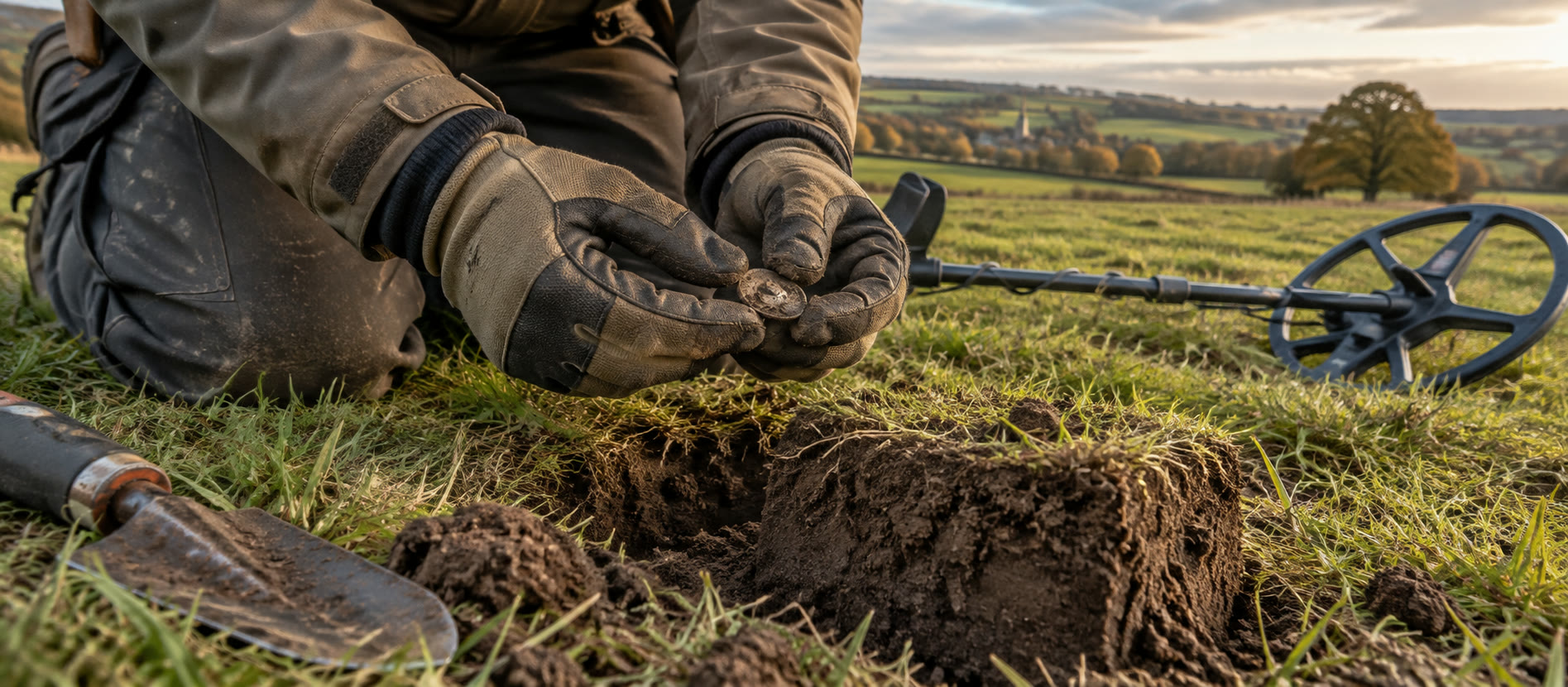
The linked Portwest glove has a nitrile-coated palm and flexible handling design. That makes it a plausible routine field glove when you need to operate a detector and pinch small ordinary objects without bare fingers. Choose a size that does not bunch at the fingertips; loose fabric can snag in a pouch or reduce control. The Amazon listing does not establish protection against needles, glass or chemicals, so we do not recommend it for those hazards.
Think through the likely hazard
On cultivated land, rusted iron and broken fencing can cut fabric. On beaches, hooks and glass may hide in sand. Look before reaching, use a tool to separate visible litter and keep sharp scrap in a rigid or protected section of your kit. If you see a suspected needle, hazardous waste or explosive item, do not handle it; the dangerous-finds guide covers the stop-and-report response. Gloves are not a reason to dig where permission or ground conditions prohibit recovery.
Finds care while wearing gloves
A wet muddy glove can abrade a coin or transfer grit to a fragile surface. Keep recovery and clean handling separate: record a significant object's context, minimise touching, and put it in an appropriate separate container. Read should you clean finds? before brushing or washing an uncertain object. For ordinary stable rubbish, keep a separate scrap pocket from any item worth identifying.
Before buying gloves
Check sizing, seam comfort, grip when damp, breathability and how they work with your phone or pinpointer. Carry a dry spare if cold or wet hands make control difficult. Replace torn gloves; do not repair a damaged coating and then treat it as protective PPE. The complete kit checklist puts gloves in the context of the whole outing.
Common questions
Frequently asked questions
Are ordinary work gloves puncture-proof?
No. Do not assume needle or glass protection without an applicable tested rating, and avoid handling unknown hazards.
Are thin coated gloves enough for beach detecting?
They can help with ordinary grip but may not suit wet, sharp or contaminated material. Match PPE to the assessed task.
Should I touch an old coin with muddy gloves?
Minimise handling and avoid rubbing grit across the surface. Record it and seek appropriate finds-care advice.
How should detecting gloves fit?
Snug enough for controls and small objects without constricting movement; check size with the clothing used in the field.