
PERMISSIONS · MANAGED LAND
Can you metal detect on National Trust land?
National Trust policy on hobby detecting, beaches and exceptional archaeological projects, plus the separate National Trust for Scotland position.
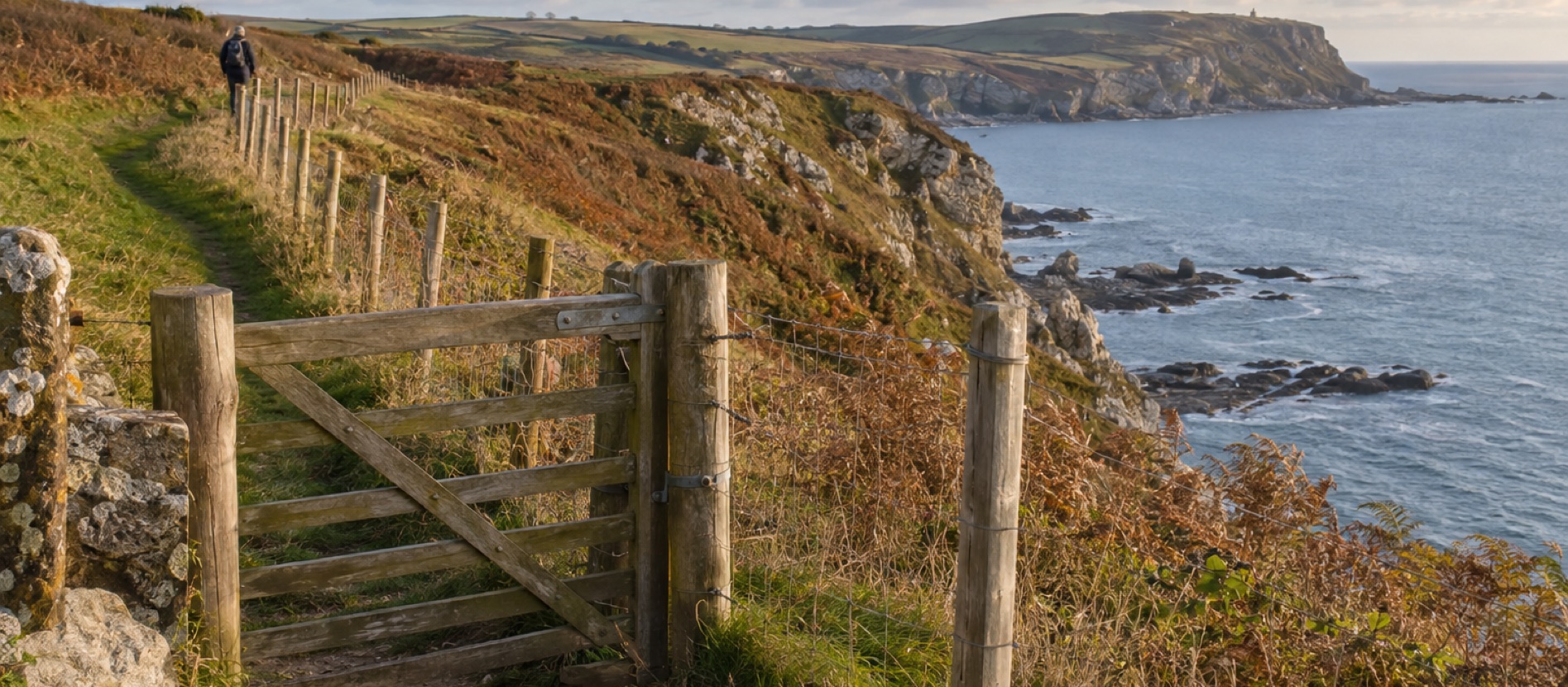
Check ownership; a Trust place may contain land with different interests and restrictions.
Trust beaches are not automatically covered by general foreshore assumptions.
Seek a different, explicitly permitted site for recreational detecting.
The National Trust's published position
The National Trust metal-detecting policy says hobby detecting is not allowed on land it owns, including beaches. Access as a visitor, membership, a public footpath or a conversation with a tenant does not grant a detecting exception. Do not start a sweep on Trust land while waiting for a reply or assume that a “no digging” approach makes the activity acceptable.
The Trust can allow detecting as part of a clearly defined archaeological research project. Its policy requires a research design and an Archaeological Research Agreement issued by a Trust archaeologist. A farmer, tenant, volunteer or other local contact cannot substitute for that specialist authorisation. In Northern Ireland, the project may also need the statutory excavation licence described in our Northern Ireland guide.
What about National Trust beaches?
Coastal ownership is layered. Some foreshore is owned by the Crown Estate; other stretches have different ownership or rights. The Trust's own land is covered by its no-hobby-detecting policy, including beaches. Do not treat a general Crown Estate permission as permission for every metre between car park, dry sand and tide line. Identify the exact strip and the applicable owner or manager, plus any nature or heritage designations. See our Crown Estate foreshore guide for the separate terms of that permission.
National Trust for Scotland is separate
The National Trust for Scotland is a different organisation. Its visitor guidance says metal detecting is permitted only within a programme agreed and managed by its Archaeology team. Scottish finds also fall under the Treasure Trove process, not the England and Wales Treasure rules. Do not rely on a National Trust England/Wales email when considering a Scottish property.
What if you see a detectorist or make an accidental find?
Avoid confrontation. Report suspected unauthorised activity to Trust staff or the police as appropriate, with a location and factual observations. If you come across an apparent archaeological object while walking, do not dig further or clean it. Tell the property team and follow the relevant nation's reporting rules. The Trust's policy says finds from its land, apart from statutory Treasure, belong to the Trust; a visitor should not pocket an object on the assumption that “finders keepers” applies.
A better route to a lawful search
Ask a private landowner whose land is not subject to a no-detect policy; check the designated-site record and put boundaries, recovery and finds terms in writing. Our permission request guide and agreement checklist show how to do this without pressuring a land manager for an exception they cannot grant.
The pouch above is for authorised ground elsewhere. Equipment does not create access rights, and a carefully restored hole does not override the Trust's policy.
Common questions
Frequently asked questions
Can National Trust members metal detect on Trust land?
No. Membership and visitor access do not provide a hobby-detecting exception to the National Trust's published policy.
Does the National Trust allow detecting on its beaches?
Its no-hobby-detecting policy expressly includes beaches on Trust land. Check exact ownership rather than assuming general foreshore terms cover every part of a beach.
Can a Trust tenant give me permission?
Not for an exception to the Trust's policy. Its specialist archaeologist must authorise a defined archaeological research project through the required agreement.
Is National Trust for Scotland the same organisation?
No. NTS has its own policy and permits detecting only within a programme agreed and managed by its Archaeology team.
Helpful products
For a permitted site elsewhere
If you secure a separate lawful permission, carry finds in separate compartments with their location notes; this is not a reason to search Trust land.

All-round field pouch
XP Finds Pouch
Best for: Regular field and wet-weather searches where quick debris storage and a separate protected pocket matter.
- Open pocket plus zipped pocket
- Washable with water drainage
- Belt, strap or MOLLE mounting
A washable belt pouch with an open debris compartment, a zipped pocket for better finds, drainage and MOLLE attachment points for a pinpointer holster or lanyard.
Know before buying: The open section is for robust scrap, not fragile objects; use a rigid finds box inside the zipped area for coins and delicate artefacts.