
PERMISSIONS · ACCESS LAND
Can you metal detect on access land or common land?
Public walking rights, CROW open access and common-land status do not automatically allow metal detecting or digging. Learn the permission checks.
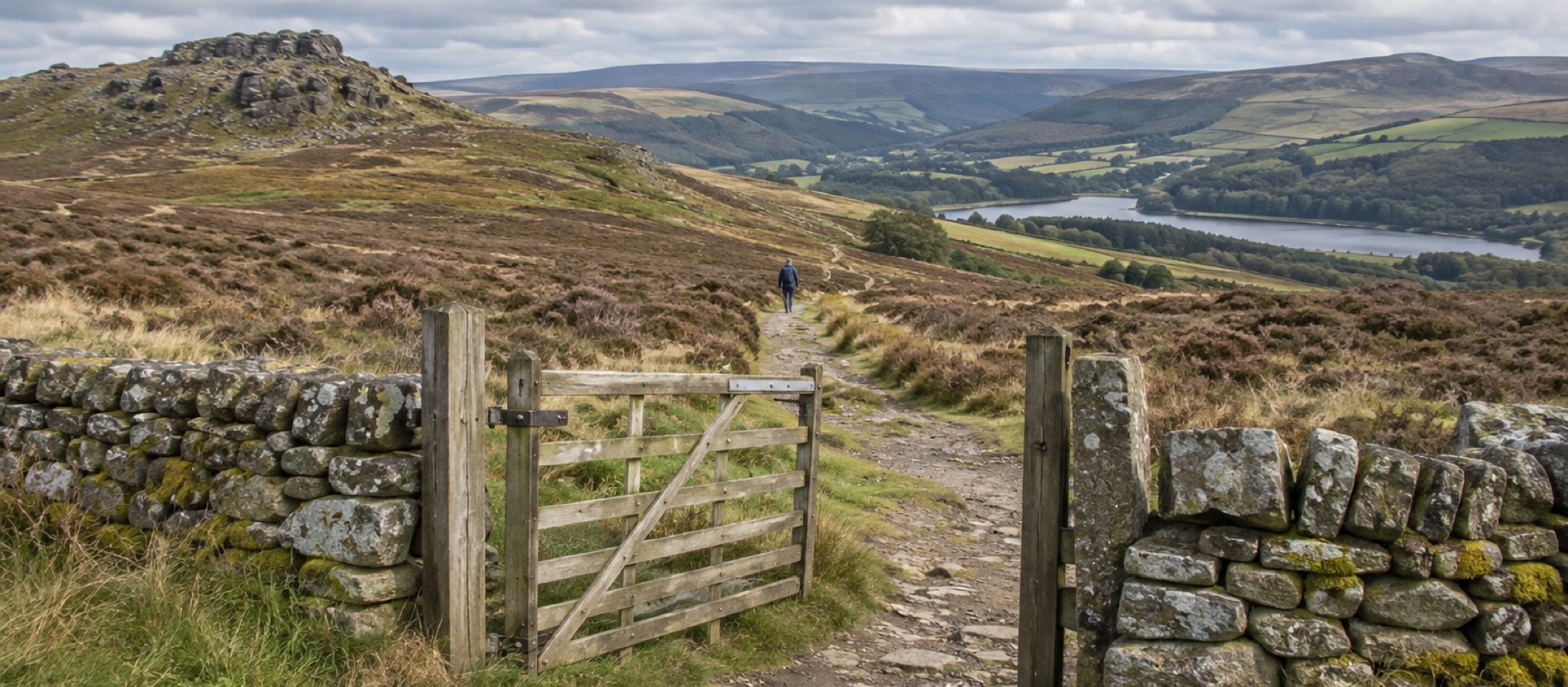
CROW access does not include using a metal detector without separate permission.
Common land still has an owner and may have additional commoners' rights.
Paths and open gates do not grant a right to dig or remove objects.
Open access does not mean open detecting
The Countryside and Rights of Way Act 2000 (CROW) gives a public walking right over mapped open country and registered commons in England and Wales, subject to limits. Natural England's guidance expressly lists metal detector use among activities not included in that access right unless the landowner gives permission or another right applies. Detecting and recovering an object are different from passing over land on foot.
Wales applies the same CROW framework, with Natural Resources Wales administering access mapping and local notices. Check the current map and restrictions for walking, then separately obtain detecting consent from someone with authority over the ground. A public access sign is not a detector permit.
Does common land belong to everyone?
No. GOV.UK's common-land guidance explains that common land has an owner, while others may hold specific rights such as grazing. The public may have certain recreation rights, but those are not general rights to dig for and keep metal objects. A village green likewise has a particular legal status and protection against damaging activities. The owner, council, commoners and manager may have different interests; a single informal “yes” may not settle them all.
Find the commons register and land-management contact for the exact parcel. Ask whether detecting is prohibited by a byelaw, designation, management scheme or tenancy. If authorisation is possible, request the boundary and recovery conditions in writing. Our council-land guide covers council-managed examples that vary by site.
Public footpaths, bridleways and coastal paths
A right of way is normally a right to pass and repass within its lawful scope, not a licence to search adjacent fields or lift objects from the path surface. GOV.UK's rights-of-way guidance describes access rights, not ownership of the land. You still need a suitable land permission for detecting and recovery. On beaches, check the exact foreshore owner and any Crown Estate terms separately; a coastal path does not expand those terms.
Why upland permissions need extra care
Open-access landscapes can include scheduled monuments, nationally important earthworks, Sites of Special Scientific Interest, sensitive habitats and grazing operations. A landowner may be willing to discuss one ordinary field but unable to authorise activity in a protected part. Check official designation records and ask the relevant heritage or conservation body where the boundary is uncertain. The scheduled-monument page explains the additional statutory consent barrier.
If you are offered permission
Confirm the person has the right to permit both scanning and ground disturbance, not just parking or access. Mark a small allowed area on a map, state excluded features, agree a maximum recovery method and a finds-recording plan, and respect any cancellation or livestock instruction. Apply the correct country's finds law: Scotland and Northern Ireland differ from England and Wales.
The product above is useful only after that independent permission exists. Walking rights should never be used as a shortcut into detecting rights.
Common questions
Frequently asked questions
Can I use a metal detector on CROW open-access land?
Not under the public access right alone. Natural England says detector use requires landowner permission or another separate right.
Does common land have an owner?
Yes. Common land has an owner and may also carry commoners' rights; public recreation rights do not automatically include detecting and digging.
May I detect along a public footpath?
A right to pass along a path is not a general right to search or remove objects from it or the adjoining land. Obtain specific permission.
What else should I check on access land?
Check the exact owner or manager, protected monuments, conservation designations, local byelaws, tenancies and any limits on disturbance.
Helpful products
For a separate authorised permission
Once a landowner permits a search on suitable ground, separate finds and record the field location from the start.

All-round field pouch
XP Finds Pouch
Best for: Regular field and wet-weather searches where quick debris storage and a separate protected pocket matter.
- Open pocket plus zipped pocket
- Washable with water drainage
- Belt, strap or MOLLE mounting
A washable belt pouch with an open debris compartment, a zipped pocket for better finds, drainage and MOLLE attachment points for a pinpointer holster or lanyard.
Know before buying: The open section is for robust scrap, not fragile objects; use a rigid finds box inside the zipped area for coins and delicate artefacts.