
FIELD KIT · BUYING GUIDE
Best knee pads for metal detecting field use
Choose knee pads for metal detecting by fit, ground and recovery posture. Compare strapped pads with kneeling mats and learn when a no-kneel approach is wiser.
Our recommendations
Relevant verified products
Compare coverage, fastening and shape with how often you kneel and the ground you search. Confirm the exact listing and fit before ordering.

Strapped knee pads
Thunderbolt gel and foam knee pads
Best for: Detectorists who kneel on suitable firm ground and can tolerate strapped pads.
- Gel and foam listing
- Adjustable straps
- Firm dry ground
A pair of work knee pads listed with gel-and-foam cushioning and adjustable straps for occasional kneeling.
Know before buying: Fit and comfort vary; check the straps and avoid assuming they make unstable or sharp ground safe.
| Option | Best use | Main advantage | Watch for |
|---|---|---|---|
| Strapped gel or foam pads | Repeated short kneels | Always available | Can slip or chafe |
| Portable kneeling mat | Occasional stationary recovery | No leg straps | Another item to carry and place |
| Standing or assisted recovery | Kneeling is unsafe or painful | Avoids forced crouching | Requires suitable tool and permission |
Fit through a whole search, not only one kneel
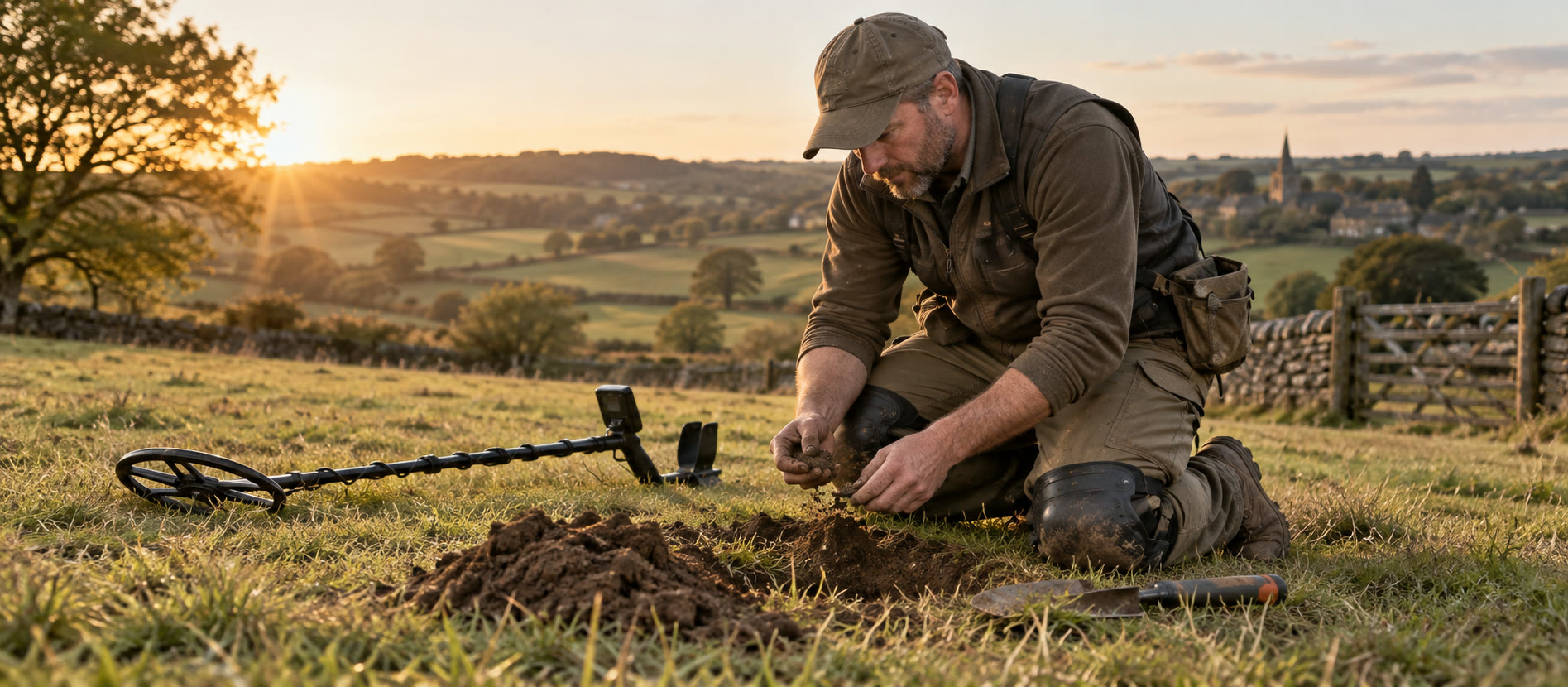
A pad that feels soft in a shop can slide down after twenty minutes of walking, bunch behind the knee or catch on vegetation. Try it over your usual trousers, walk, crouch and stand repeatedly. Pressure should be spread across the knee without a strap cutting into the back of the leg. If you need to kneel on wet ground, look for a cleanable outer shell; if you mostly work dry pasture, a bulky hard shell may be unnecessary.
Adjustable strapped option: Thunderbolt pads
The linked Thunderbolt listing describes gel-and-foam cushioning and adjustable straps. That makes it a plausible option for someone who kneels often enough to prefer on-body pads. The listing does not establish long-session comfort, strap life or protection on sharp stones. If the pads migrate, take them off rather than repeatedly tightening into an uncomfortable position.
Kneeling is not always the answer
A detectorist with reduced knee mobility may do better with a standing recovery tool, a trusted companion for permitted digs, or a site where no recovery is required. Avoid promising that a particular pad makes detecting accessible to everyone. Our limited-mobility detector guide starts with balance, route and recovery rather than equipment alone. For hard or frozen ground, postpone digging rather than cushioning a forceful attempt.
Ground care and hygiene
Keep pads clear of grit that could abrade sensitive turf, and avoid pressing down on an exposed archaeological feature. Open only a permitted, restorable plug; pinpointing accurately reduces unnecessary knees-on-ground time. Clean pads after contaminated mud, dry them before storage and replace a cracked shell or failing strap. A pad is comfort equipment, not a safety clearance for glass, needles or unstable banks.
Before choosing a pad
Ask how many recoveries you actually make per hour, whether you can rise comfortably and whether straps work with your clothing. Try borrowing a mat or existing work pads for a short authorised session. Spend on dedicated pads only if they solve a repeated comfort issue, and never use them to justify digging a site whose conditions cannot be restored.
Common questions
Frequently asked questions
Do knee pads make digging safe on any ground?
No. They add comfort but do not overcome protected status, poor turf conditions, glass or unstable terrain.
Are strapped pads better than a kneeling mat?
Strapped pads are ready for repeated stops; a mat can be simpler for occasional recovery. Fit and carry preference decide.
What if kneeling is painful or impossible?
Adapt the route and recovery method, use help where appropriate, or leave signals unrecovered. Do not force a posture.
Can knee pads damage pasture?
Grit on a hard shell or prolonged pressure can mark sensitive turf. Keep pads clean and restore only suitable authorised plugs.