
FIELD KIT · BUYING GUIDE
Best boots for metal detecting on UK ground
Choose metal detecting boots for wet fields, muddy tracks and beaches. Weigh waterproofing, grip and comfort without mistaking wellies for all-terrain safety.
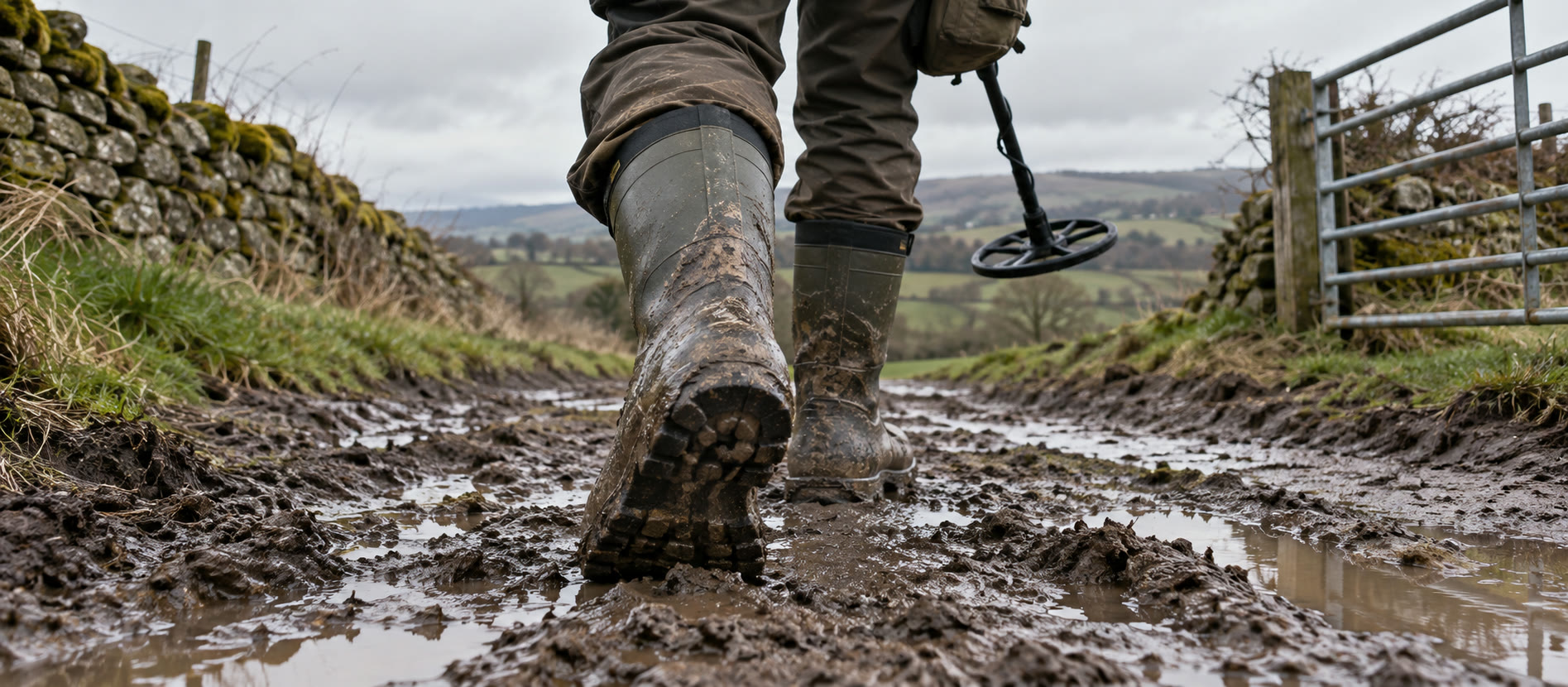
Our recommendations
Relevant verified products
Compare waterproof coverage, sole design and fit for the routes you actually use. Confirm the exact listing and size before ordering.

PVC wellington
Dunlop Hobby waterproof wellington boots
Best for: Wet farm approaches and soft ground when the fit and outsole suit the route.
- Knee-high
- PVC listing
- Wet approaches
PVC knee-high wellingtons listed as waterproof for ordinary wet outdoor work.
Know before buying: Not a guarantee of traction on algae, shingle or steep clay; check size, sole and comfort in person.
| Option | Best use | Main advantage | Watch for |
|---|---|---|---|
| PVC wellington | Wet field approaches | High water barrier | Less ankle precision and breathability |
| Waterproof walking boot | Longer mixed-ground route | Support and walking comfort | Lower cuff and membrane wear |
| Dry trail shoe | Firm dry access | Lighter feel | Poor choice for saturated ground |
Start with the walk in
A detectorist may cover more distance between gates, furrows and finds than expected. Try boots with the socks you actually wear, then walk on level and uneven ground. Heel slip, toe pressure and a sole that clogs with clay matter more than a product photo. Ankle support is partly fit and partly footwear design; a high PVC boot is not automatically more stable than a well-fitting walking boot.
Wet-field example: Dunlop Hobby wellingtons
The linked Dunlop Hobby listing describes knee-high waterproof PVC wellies for outdoor work. They are a clear option for ordinary wet approaches where water is shallow and footing is otherwise sound. A waterproof upper does not establish reliable traction on algae, deep mud or steep clay. Check the precise size, shaft width and outsole before ordering; if the boot rubs or slides, it is the wrong choice regardless of its waterproof claim.
Beach, clay and summer ground
At the coast, sand inside the cuff can abrade skin; wet rock and weed are slip hazards even with tread. Keep to a safe access route and consult the tide guide before any shoreline search. On heavy clay, tread packed with mud can lose grip; clean it before climbing a bank or stile. In dry summer pasture, a heavy boot may add fatigue without improving the ground. Weather and soil moisture should influence the trip plan.
Comfort and safe carry
If you carry a spade, keep its blade sheathed and use a strap that does not interfere with walking. Do not test footwear by stepping into unknown water depth. Consider blister history, socks, a change of shoes for the drive home and an exit route that remains safe if weather changes. Waterproof footwear does not protect a detector's control unit or headphones: check their separate ratings.
Before buying boots
Try the pair indoors with your field socks so return options remain open. Check heel hold, toe room, calf clearance and whether you can operate pedals or walk gates safely. Choose the most comfortable boot that covers your actual wetness and terrain; leave a hazardous site rather than treating a more expensive boot as a substitute for judgement.
Common questions
Frequently asked questions
Are wellingtons best for every detecting site?
No. They suit some wet approaches but can be hot or less comfortable over long walks; assess footing and fit.
Do waterproof boots guarantee grip on mud or seaweed?
No. Outsole traction varies and slippery terrain may remain unsafe. Choose another route or postpone.
Should I wear metal-free boots for detecting?
Boot hardware can cause interference if the coil repeatedly passes close to it. Test your normal gait before replacing usable footwear.
What boot fit should I check?
Walk with field socks and check heel hold, toe room, calf clearance and comfort on uneven ground.