
DETECTORS · ONE MACHINE
One metal detector for fields and beaches?
Choose one detector for permitted UK fields and beaches by balancing salt-sand stability, whole-detector waterproofing, weight and controls.
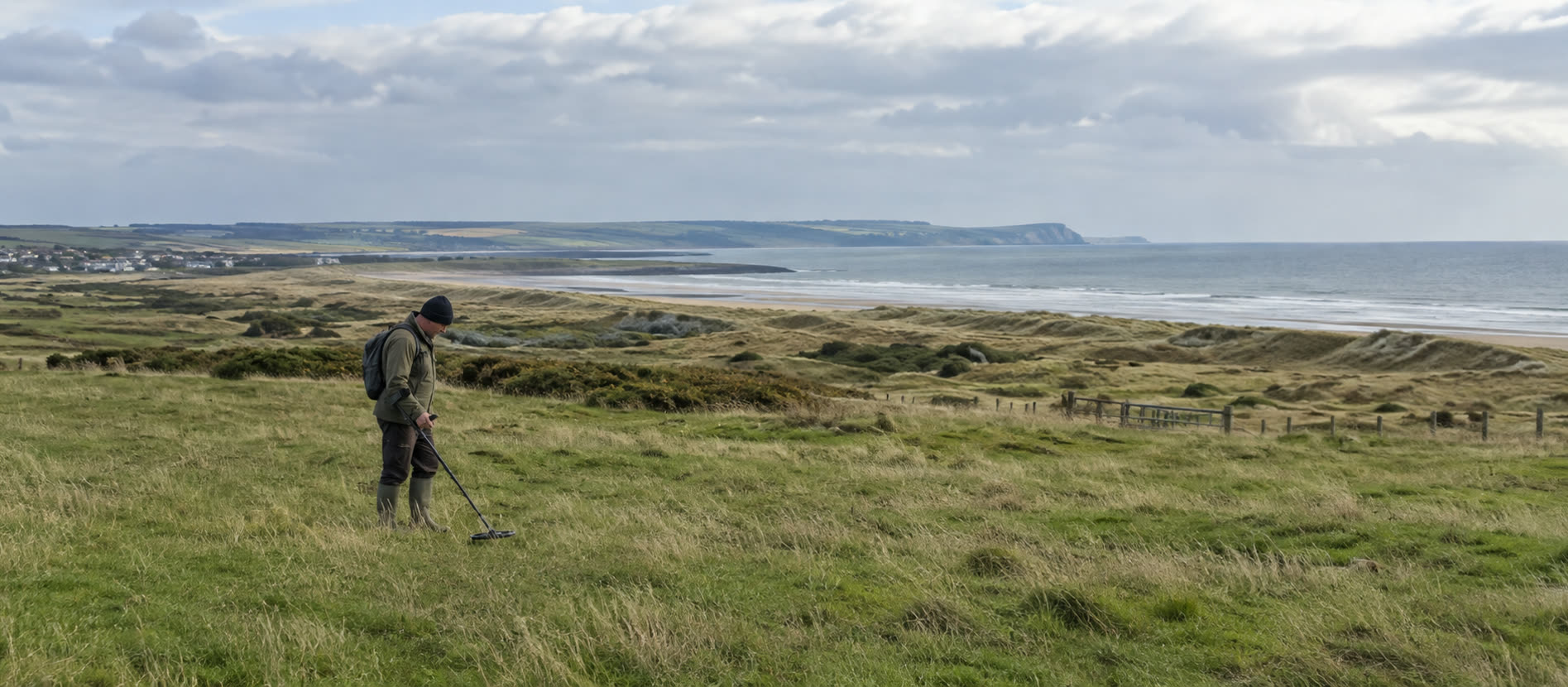
Choose by the harder of your two grounds
Do not buy a field favourite and assume that a Beach label guarantees calm wet-sand operation. Equally, do not pay for underwater capability if you will stay on dry ground.
Compare the exact model, accessories and intended ground before buying.
Start with the ground you actually visit
A detector that works well on an ordinary field may chatter on salt-wet sand, and a beach-focused machine may feel heavy or cumbersome over a long inland session. List your realistic split: dry field, iron-strewn stubble, dry beach and saturated salt sand are different jobs. Ask which site will expose the biggest compromise. If you mainly detect pasture and make one annual dry-beach trip, you need a different balance from a weekly wet-sand walker.
The first filter is permission. Field access must come from the landholder; beaches need checks for ownership, byelaws, protected status and tide. A field-and-beach machine does not confer a right to recover on either. Start with getting permission and the UK beach guide.
Frequency approach and waterproof boundary
Simultaneous multi-frequency is convenient on varied soil and salt conditions, but stable settings and careful sweep matter more than the label. X-TERRA ELITE and SCORE combine simultaneous modes with whole-detector waterproof ratings. The current VANQUISH 360 also uses automatic Multi-IQ and is fully waterproof to 5 m (IP68). Older VANQUISH 340/440/540 models are different: their control units are not submersible. Check the exact model, seals, headphones and site safety before entering water.
Choose the appropriate manufacturer field or beach programme, perform noise cancellation where available, and lower sensitivity until false signals settle. Avoid copying someone else's target-ID chart from a different machine or soil. Our ground-balance guide and wet-versus-dry sand guide explain why the same settings do not transfer blindly.
Which existing catalogue option fits?
For a regular mixed-ground user who wants more control, the X-TERRA ELITE is the most adaptable of this three-machine set. SCORE suits a buyer who wants simultaneous multi-frequency and a simpler routine. VANQUISH 360 is a sensible entry machine when the user values a light, uncomplicated sweep over adjustable controls. Compare the listed grip and shaft adjustment with your own reach and carrying needs.
Which compromise is yours?
If most of your hours are on inland fields, decide first whether you need detailed iron and audio control or simply a stable, repeatable signal. The ELITE's adjustments can be worth learning for the former; SCORE or VANQUISH 360 may suit the latter. If the weekly destination is conductive wet sand, prioritise a settled beach response and clear tide plan over a claimed maximum depth. If you alternate almost equally, compare setup time as well as performance: the best mixed-ground detector is one you can reset confidently when the surface changes.
Try a short dry-sand run before crossing to wet sand. Record the profile and sensitivity, then change only what is needed to quiet the salt response. A machine that is excellent on a dry field but cannot give repeatable signals on the coastal ground you actually search is not a successful all-round choice. Conversely, there is little reason to pay for more beach capability if your permitted coast trips are rare and stay on dry upper sand.
An honest two-session test
On a permissioned inland site, use a known modern test object and record your factory profile, sensitivity, sweep height and response. Repeat on a permitted beach, with one run on dry sand and another safely on firm wet sand well away from the waterline. If the wet-sand machine chatters, change one setting at a time. Compare comfort after an hour, not just response in a five-second video. Rinse only the parts and in the manner the manual permits after salt exposure. Keep a field log so any upgrade decision is based on your own conditions.
Common questions
Frequently asked questions
Can one detector handle a field and wet beach?
Yes, if its salt-sand behaviour, controls and fit suit both. Simultaneous multi-frequency is a useful option, not a guarantee.
Does a waterproof coil make the whole detector waterproof?
No. Check the exact model, control housing, connectors and headphones separately. The current VANQUISH 360 is fully waterproof to 5 m, unlike older coil-only VANQUISH models.
Which site should decide my choice?
Prioritise the site you will visit most and the ground that exposes your current machine's real limitation.
Can the same settings be used on field soil and wet salt?
Do not assume so. Start with the relevant manufacturer profile and establish a stable baseline on each site.
Helpful products
Choose by the harder of your two grounds
Do not buy a field favourite and assume that a Beach label guarantees calm wet-sand operation. Equally, do not pay for underwater capability if you will stay on dry ground.

Mid-range
Nokta SCORE
Best for: Mixed inland and beach use for someone who wants simultaneous frequency operation without a dense advanced-control menu.
- Simultaneous multi-frequency
- Whole detector to 5 m (IP68)
- 1.2 kg
A light, rechargeable simultaneous multi-frequency detector with three search modes, 60 target IDs and full 5 m waterproofing.
Know before buying: The simplified SCORE has fewer adjustment options than Nokta's DOUBLE and TRIPLE SCORE models, so keen tinkerers may outgrow its control set.